
Introduction to VanEck’s Price Projection
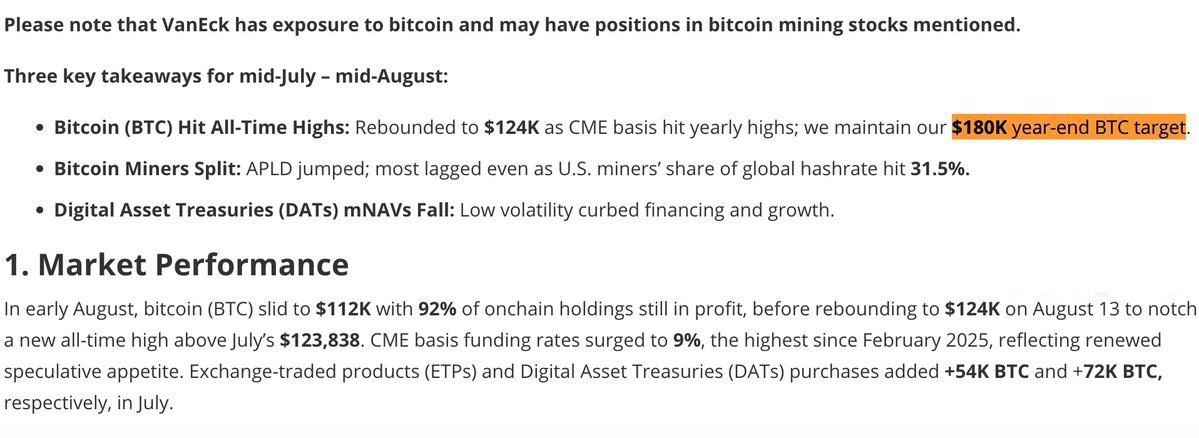
VanEck is a prominent global investment management firm that has gained recognition for its expertise in various asset classes, including cryptocurrencies. Founded in 1955, VanEck has a legacy of innovative investing, offering various financial products to fulfill diverse investor needs. The firm has recently made headlines with its bold prediction regarding Bitcoin’s price trajectory, forecasting that it could reach an impressive $180,000 by the end of 2025. This ambitious estimate is significant both for existing and potential investors in the cryptocurrency market.
The context behind VanEck’s projection is crucial for understanding its potential impact. The cryptocurrency space has witnessed substantial volatility, which influences investor sentiment and market movements. Over the last few years, Bitcoin has experienced significant price swings, climbing from a few thousand dollars to an all-time high and then retracing during periods of uncertainty. Despite these fluctuations, the general sentiment among investors appears to be shifting favorably towards cryptocurrencies, as they increasingly view them as viable alternatives to traditional financial assets.
VanEck’s forecast takes into account the evolving market landscape and the growing institutional interest in Bitcoin and other cryptocurrencies. This interest is bolstered by various macroeconomic factors, including inflation concerns and the potential for central bank digital currencies. Investment firms like VanEck are increasingly integrating cryptocurrencies into their portfolios, suggesting that Bitcoin’s legitimacy as an asset class is being recognized more broadly. As a result, their price prediction is not only a reflection of technical analysis but also an acknowledgment of a changing economic paradigm.
The implication of reaching such a high price point is profound for investors. If VanEck’s projection proves accurate, it could attract a new wave of investment into the Bitcoin market. This forecast serves as a focal point for discussion among investors, analysts, and cryptocurrency enthusiasts, ultimately highlighting the importance of ongoing market developments in shaping the future of Bitcoin.
Market Analysis: Recent Trends and Institutional Interest
Recent trends in the Bitcoin market have showcased a notable trajectory, marked by significant price fluctuations and an increase in institutional interest. Following a prolonged period of volatility, Bitcoin has experienced a remarkable rebound, reaching new all-time highs. This resurgence can be attributed to several factors, including increased adoption among institutional investors and broader acceptance within diverse sectors of the economy.
Analysts Matthew Sigel and Nathan Frankovitz have highlighted that the participation of institutional investors has played a pivotal role in enhancing market stability. Unlike retail investors, who often react impulsively to market movements, institutional players bring a level of strategic investment that can mitigate extreme fluctuations. The entry of institutional capital into the Bitcoin market signals a shift towards mainstream acceptance, fostering greater confidence among both individual and institutional investors.
Furthermore, the broader economic environment has also provided a conducive atmosphere for Bitcoin’s growth. Macroeconomic conditions, such as inflationary pressures and currency debasement, have led investors to seek alternative assets like Bitcoin, which is often viewed as a hedge against traditional financial systems. As more institutions allocate a portion of their portfolios to Bitcoin, the cryptocurrency’s price may gain momentum, similarly influencing other digital assets in the market.
For potential investors considering Bitcoin as a long-term asset, understanding these market trends is crucial. The fluctuations in price, paired with the increased institutional interest, suggest that Bitcoin could provide opportunities for substantial returns. However, investors should remain cognizant of the inherent risks associated with this emerging asset class, as volatility remains an intrinsic characteristic of the cryptocurrency market.
Regulatory Environment and Policy Tailwinds
The regulatory landscape surrounding Bitcoin and the broader cryptocurrency market has evolved significantly in recent years, contributing to an increasingly favorable environment for investors and institutions alike. One of the critical drivers of this transformation is the growing recognition by regulators of digital assets as legitimate financial instruments. As various governments and regulatory bodies seek to establish clear guidelines, this clarity appears to act as a catalyst for increased institutional participation in the market. With Bitcoin’s unique properties and benefits, these regulatory developments can support its upward price trajectory.
Recent policy advancements, such as the introduction of crypto-friendly regulations in key markets, have boosted investor confidence. For instance, countries exploring frameworks for digital currencies, like the European Union’s Markets in Crypto-Assets (MiCA) regulation, serve to provide a structured approach that mitigates risks associated with cryptocurrencies. Such developments not only reassure investors but also encourage traditional financial institutions to embrace Bitcoin and related assets. Consequently, the predictions around Bitcoin’s potential to reach $180,000 by 2025 are being bolstered by these supportive policy shifts.
Furthermore, as regulatory clarity improves, institutions may perceive Bitcoin less as a speculative asset and more as a valid investment class. This paradigm shift can facilitate greater capital flow into the cryptocurrency ecosystem, enhancing market liquidity and potentially leading to price appreciation. Additionally, regulatory acceptance can enable improved product offerings related to Bitcoin, such as ETFs, which could attract a broader range of investors. The alignment of regulatory frameworks with the unique attributes of Bitcoin seems poised to fortify its standing in the financial market. Thus, the interplay between a supportive regulatory environment and institutional interest could be fundamental in realizing VanEck’s ambitious forecast.
Conclusion: The Future of Bitcoin and Investment Opportunities
In the ever-evolving landscape of cryptocurrency, Bitcoin continues to capture the attention of investors and market analysts alike. The recent prediction by VanEck, projecting Bitcoin could reach as high as $180,000 by 2025, underscores the growing confidence among financial experts in the potential of this digital asset. Several factors contribute to this bullish outlook, including increasing institutional interest, a rise in retail adoption, and favorable regulatory developments that can enhance Bitcoin’s legitimacy and accessibility.
As more traditional financial entities engage with Bitcoin, we observe a shift in perception regarding its value and stability. Institutional investments signify a maturation in the cryptocurrency market, suggesting that Bitcoin is becoming a recognized asset class. Combined with a growing understanding of market trends and technological advancements, this has created unique investment opportunities for both seasoned investors and newcomers alike. It is crucial for investors to analyze these trends closely, as they can influence market dynamics and inform investment strategies.
Furthermore, understanding regulatory frameworks is essential. As governments worldwide establish clearer guidelines for cryptocurrency, Bitcoin may experience a surge in widespread adoption, potentially driving its price upwards. The proactive stance taken by regulatory bodies can not only increase market stability but also foster investor confidence, making it imperative for individuals to stay updated on these developments.
In light of the potential trajectory of Bitcoin and the emerging opportunities, investors are encouraged to consider their own strategies carefully. A well-informed approach that takes into account market fluctuations, institutional behavior, and regulatory changes can aid in navigating the complex world of cryptocurrency investing. By examining these critical elements, one can better position themselves within the anticipated growth phase of Bitcoin and its future in the financial landscape.