
%3Amax_bytes(150000)%3Astrip_icc()%2FTrumpVsPowell-1e24f56b1276454784a46539de6e1a10.jpg&f=1&ipt=818bbc4452d4f123ab9b3ee7b91ec21ed5058f9975ccd4a8b37b1da67774cb67)
Trump’s Accusations Against Powell
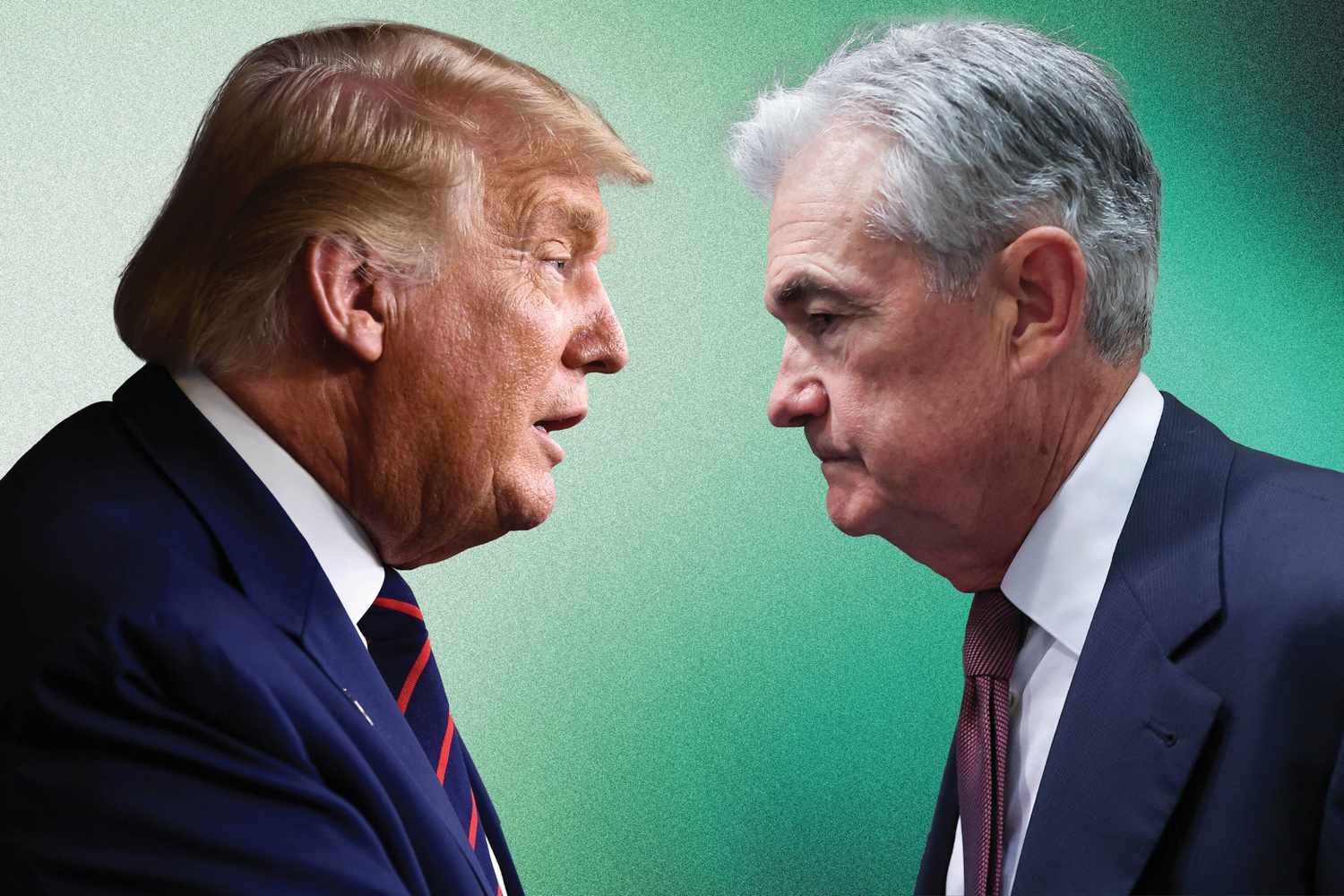
Former President Donald Trump has been vocal in his criticisms of Federal Reserve Chair Jerome Powell, emphasizing what he perceives as significant flaws in Powell’s management of monetary policy. Trump has not shied away from using colorful language to communicate his dissatisfaction, famously dubbing Powell as ‘jerome “always late” powell’. This remark highlights Trump’s attribution of tardiness to Powell’s decisions, particularly in relation to interest rate adjustments that Trump argues have detrimental effects on the economy.
In recent statements, Trump has accused Powell of gross mismanagement, targeting his approach to interest rates as being overly cautious and reactive rather than proactive. Trump contends that Powell’s reluctance to maintain lower rates or to act decisively when necessary has stymied economic growth and harmed job creation. By emphasizing a more aggressive monetary policy, Trump’s perspective asserts that the Federal Reserve should be more in tune with the administration’s economic goals, rather than adopting a stance that he believes leads to stagnation.
Moreover, Powell’s handling of inflation has also been a focal point of Trump’s criticisms. With the rising cost of living becoming a significant concern for American families, Trump has implied that Powell’s monetary policies have failed to effectively address these challenges. The former president has suggested that Powell’s decisions may be influenced by political correctness rather than pragmatic economic principles, further questioning the efficacy of his leadership at the Federal Reserve.
These accusations have broad implications not only for Powell’s reputation but also for the independence of the Federal Reserve. By publicly challenging Powell’s actions and calling for changes in monetary policy, Trump underscores the tension that exists between political leadership and central banking, raising questions about the future direction of U.S. economic policy.
The Call for Rate Cuts
Former President Donald Trump has issued a fervent call for the immediate reduction of interest rates, urging the Federal Reserve, led by Chairman Jerome Powell, to take decisive action in the face of prevailing economic difficulties. Trump’s demand for rate cuts is rooted in his belief that lowering interest rates will stimulate economic growth, foster job creation, and ultimately benefit American consumers and businesses alike. The economic landscape during this period was characterized by a slowing growth rate, persistent inflation, and uncertainty in various markets, prompting Trump to argue that a proactive approach from the Fed is necessary.
Trump’s contention is that lower interest rates would lead to a reduction in borrowing costs. This shift could encourage businesses to invest in expansion, thus creating new jobs and increasing productivity. Moreover, consumers might benefit from lower mortgage and loan rates, which could spur spending and further invigorate the economy. In his view, the ripple effect of such rate cuts would be significant, leading to a resurgence in economic activity that could ameliorate many of the challenges faced by the American populace.
Critics, however, caution that rate cuts could come at a cost. They point out that such actions could exacerbate inflation or lead to overly accommodative financial conditions that might create asset bubbles. Additionally, Trump’s public pressure on Powell raises questions regarding the independence of the Federal Reserve, as the institution is traditionally expected to operate free from political influence. If Powell were to resist Trump’s demands, the potential for an escalated conflict between the former president and the Fed would loom large, possibly affecting market confidence and economic stability. Consequently, the debate around interest rates remains a central topic in economic discussions, with significant implications for various stakeholders.
Allegations of Mismanagement: The $3 Billion Renovation
Former President Donald Trump has levied serious allegations against Jerome Powell, the Chair of the Federal Reserve, primarily concerning the management of extensive renovation projects undertaken by the institution. Central to Trump’s criticism is the assertion that a staggering $3 billion was spent on renovations that, in his view, ought not to have exceeded $50 million. This disparity highlights concerns over fiscal responsibility and oversight within one of the most influential financial bodies in the United States.
The renovations in question, although described as essential for modernizing the facilities of the Federal Reserve, have raised eyebrows among economic analysts and political commentators alike. Critics argue that such a significant financial outlay may reflect inefficiencies in project management or procurement practices, especially for a government entity handling public funds. If Trump’s claims are substantiated, they could undermine public confidence in the Federal Reserve’s ability to manage taxpayer money effectively.
The implications of these allegations extend beyond mere financial concerns, potentially impacting the reputation of the Federal Reserve as an institution. A perceived lack of accountability in spending can lead to increased scrutiny from Congress and the public. Furthermore, should these claims resonate with the public, they may also damage Powell’s credibility as he leads monetary policy during volatile economic periods. Stakeholders in the financial community and governance advocates are likely to call for thorough investigations into these expenditures, demanding transparency and accountability from the Federal Reserve.
In an era where every taxpayer dollar is closely monitored, Trump’s assertions raise critical questions regarding the mechanisms of accountability that govern financial institutions. The fallout from these allegations could prompt a reevaluation of oversight procedures and budgeting processes within the Federal Reserve, emphasizing the need for systemic reforms to restore trust in its operations.
Political Implications and Future Consequences
Donald Trump’s recent criticisms of Federal Reserve Chairman Jerome Powell have generated significant discourse regarding the political implications and the potential future consequences for both Powell and the Federal Reserve itself. Trump’s comments, which some view as attempts to undermine Powell’s authority, come in a context marked by his contentious relationship with the central bank. The nature of these allegations suggests a strategy designed to deflect blame for economic challenges, which may resonate with his base as he prepares for upcoming elections.
By publicly targeting Powell, Trump could be leveraging his influence to sow discord within the Federal Reserve, potentially aiming to reshape its operations and monetary policy in a manner that aligns more closely with his economic agenda. Such a strategy raises questions about the independence of central banking institutions and how political pressures can interfere with their fundamental roles. Should Trump’s legal threats materialize further, they could lead to increased scrutiny of Powell’s decisions, potentially impacting confidence in the Federal Reserve’s ability to operate free from political bias.
The political ramifications of these conflicts extend beyond immediate concerns for Powell’s position. They underline a broader struggle over economic policy as Trump seeks to position himself comment as a champion for economic growth and stability. His criticism may count on amplifying sentiments among those who favor stringent scrutiny of the Federal Reserve, thereby activating a segment of the electorate that feels alienated by previous monetary policies. As Trump navigates this narrative, the reliability of economic institutions may face unprecedented challenges, shaping voter perceptions and possibly diminishing trust in policymakers.
As we look ahead, the dynamic between Trump, Powell, and the Federal Reserve will likely be pivotal in determining the course of economic policy and political strategy leading into future elections. The interplay of these forces will demand careful observation, as the climate of political and economic interactions evolves in response to this high-stakes confrontation.