
Introduction to Stablecoin Transfers
Stablecoins have gained significant traction in the global financial landscape, particularly in developing regions such as Asia, Africa, and Latin America. These digital assets are designed to maintain a stable value, often pegged to traditional currencies like the U.S. dollar. As a result, stablecoins provide a reliable medium of exchange, especially in economies experiencing volatility or inflation. Their inherent stability makes them a compelling alternative to traditional cryptocurrencies, which can exhibit substantial price fluctuations.
The importance of stablecoins lies in their ability to facilitate cross-border transactions swiftly and at a lower cost. In regions where banking infrastructure is underdeveloped or limited, stablecoins offer a viable solution for transferring value without the need for intermediary institutions. This accessibility enables individuals and businesses to participate in the global economy, fostering financial inclusion and innovation. Moreover, stablecoins’ integration with blockchain technology enhances transaction transparency and security, addressing concerns associated with traditional remittance channels.
In countries with limited access to banking services, stablecoins help bridge the gap by providing an alternative means of ensuring transactional reliability. By utilizing blockchain networks for stablecoin transfers, users can bypass inefficient traditional banking systems, which often involve exorbitant fees and delays. Additionally, stablecoins facilitate immediate transfers, enabling users to transact across borders seamlessly. This feature is particularly advantageous for migrant workers who regularly send remittances back home, as it reduces transaction costs and improves the overall process.
In essence, the growing adoption of stablecoins reflects a broader shift towards digital currencies in the financial ecosystem, particularly in emerging markets. With their ability to provide stability, efficiency, and accessibility, stablecoins position themselves as a critical instrument in advancing economic development across Asia, Africa, and Latin America.
Tron’s Rise in Emerging Markets
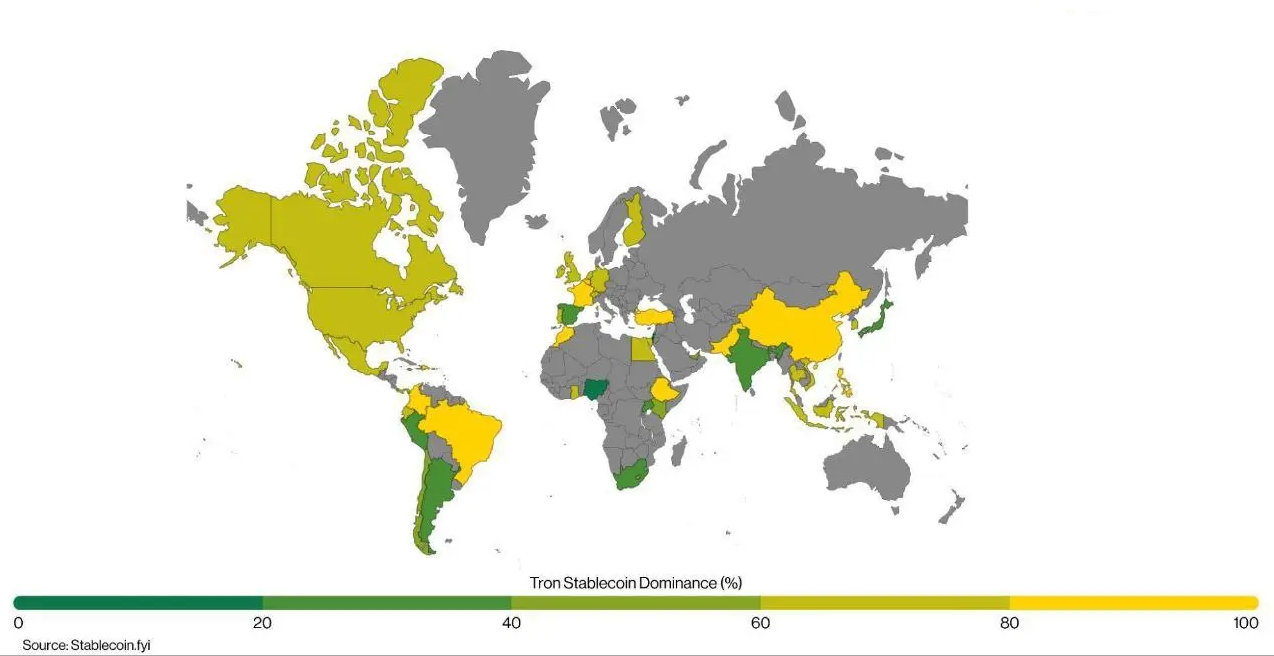
In recent years, Tron has gained significant traction as the leading blockchain for stablecoin transfers, especially within emerging markets such as Asia, Africa, and Latin America. According to a recent report by CoinDesk, multiple countries in these regions have begun to adopt Tron for their stablecoin transactions, attributing its rise to several key factors. One of the most noteworthy highlights from the report indicates that over 20 countries have integrated Tron into their cryptocurrency ecosystems, showcasing a rapidly growing reliance on this blockchain technology.
One of the primary reasons behind Tron’s widespread adoption is its remarkably low transaction fees. In contrast to other blockchains, Tron offers an economically viable solution for users, particularly in regions where financial transactions often incur prohibitive costs. This cost-effectiveness encourages more businesses and individuals to engage in cryptocurrency transactions, facilitating economic activities and promoting financial inclusivity.
Furthermore, Tron excels in providing rapid settlement times, setting it apart from its competitors. The ability to process transactions within seconds is invaluable, especially in fast-paced trading environments common in emerging markets. As businesses and individuals seek efficiency, Tron’s capacity to deliver quick confirmation on transactions has made it increasingly favorable for stablecoin transfers.
Additionally, the rise of decentralized applications and digital wallets built on the Tron blockchain plays a crucial role in its growing dominance. These innovations facilitate easy access for users, making the adoption of stablecoins more straightforward for those who may lack extensive technical knowledge. As such, Tron not only positions itself as a technologically advanced platform but also as a highly accessible option for a broader audience looking to engage in stablecoin transactions.
Comparative Analysis: Tron vs. Other Blockchains
As the demand for stablecoin transfers grows in developing regions such as Asia, Africa, and Latin America, the choice of blockchain becomes critical. Tron has emerged as a prominent contender in this space, particularly when compared to established platforms like Ethereum and BNB Chain. One of the primary advantages of Tron lies in its transaction fees, which are significantly lower than those associated with Ethereum and BNB Chain. High gas fees on Ethereum, especially during peak usage periods, can deter users and increase the cost of transactions, thereby limiting accessibility for individuals in regions where every financial transaction counts.
Furthermore, scalability issues present a challenge for both Ethereum and BNB Chain. As user adoption increases, these blockchains often struggle to maintain fast processing times, leading to network congestion and delays in transaction confirmations. In contrast, Tron was designed with scalability in mind, boasting a higher throughput capacity. This enables Tron to handle thousands of transactions per second, making it particularly suitable for users in developing economies who require prompt and efficient financial services.
Another notable distinction is the level of decentralization and governance mechanisms in place on these platforms. Although Ethereum has made strides in this area, its transition to a proof-of-stake model has raised questions about total decentralization. Tron, however, operates on a delegated proof-of-stake consensus, allowing for a more inclusive decision-making process among its community of stakeholders. This can foster a more responsive ecosystem, especially important for users in regions that often experience economic instability.
In conclusion, the comparative advantages of Tron—lower transaction fees, superior scalability, and inclusive governance—position it as a viable alternative for stablecoin transfers. These features cater to the needs of users in Asia, Africa, and Latin America, ultimately driving greater financial inclusion in these developing markets.
Future of Stablecoins and Tron’s Role
As the adoption of stablecoins continues to grow across various markets, the role of Tron in this evolving landscape cannot be understated. Stablecoins are designed to provide the benefits of cryptocurrency, such as its fast transaction speeds and low fees, while mitigating the volatility typically associated with digital assets. The strategic positioning of Tron as a leading blockchain for stablecoin transfers, particularly in Asia, Africa, and Latin America, suggests that it will continue to play a significant role in the future of digital payments.
Regulatory developments in different regions will shape the trajectory of stablecoins and their integration into existing financial systems. As governments and financial institutions craft policies addressing digital currencies, Tron’s ability to adapt to these regulations will be crucial. Those regulations that promote innovation while ensuring consumer protection may facilitate a smoother integration of stablecoins into traditional finance. This could further cement Tron’s reputation as a secure and compliant platform for stablecoin transactions.
Additionally, the possibility of Tron serving as a bridge between decentralized networks and real-world economies opens up expansive opportunities for stablecoins. By facilitating seamless transactions between cryptocurrency and fiat currencies, Tron can enhance the utility of stablecoins in daily commerce. This could ultimately lead to the establishment of a robust ecosystem where stablecoins operate fluidly within the realms of digital and traditional payments.
As stablecoins evolve, it is expected that they will not only enhance international remittances but also provide financial solutions for unbanked populations, particularly in developing regions. Tron’s infrastructure already supports low-cost, high-speed transactions, making it an ideal candidate to drive financial inclusion. Thus, the future of stablecoins and Tron’s involvement in this sector may offer profound improvements to the way individuals and businesses transact across borders, potentially transforming global commerce.