
Bitcoin’s Hard Cap and Current Supply
One of the fundamental principles that underpin Bitcoin is its capped supply, set at a maximum of 21 million coins. This definitive limit establishes Bitcoin as a deflationary asset, distinguishing it from traditional fiat currencies, which can be printed in unlimited amounts by central banks. The scarcity of Bitcoin is a critical factor in its value proposition, making it particularly appealing to investors seeking a hedge against inflation and currency devaluation.
As of October 2023, over 18.6 million BTC have already been mined, leaving just approximately 2.3 million coins remaining to be issued. This current mining status is significant for several reasons. Firstly, the process of mining Bitcoin becomes progressively more challenging over time due to a mechanism called the “halving,” which reduces the rewards miners receive approximately every four years. Consequently, the remaining supply is being released at an ever-slowing rate, increasing the potential scarcity of Bitcoin.
The implications of Bitcoin’s hard cap extend beyond mere scarcity. This limit fundamentally structures the Bitcoin ecosystem and affects market dynamics. With only a fixed amount of BTC available, demand becomes a powerful driver of price movements. Increased interest from institutional investors and the mainstream adoption of cryptocurrencies further intensify this effect. The remaining 2.3 million coins, which will gradually become available as mining progresses, are likely to play a crucial role in the long-term valuation of Bitcoin, particularly as more individuals and businesses recognize its unique scarcity.
Through understanding Bitcoin’s hard cap and the current mining status, one gains insight into how its design serves to create a digital asset that defies inflationary pressure, challenging conventional economic paradigms and raising intriguing questions about its future as a global currency.
The Concept of Scarcity in Economics
The concept of scarcity is a foundational principle in economics that refers to the limited nature of resources in comparison to the unlimited human desires for those resources. This imbalance creates competition among consumers, ultimately influencing the value and pricing of goods and services. In the context of Bitcoin, scarcity is particularly significant. Bitcoin is designed with a capped supply of 21 million coins, establishing a clear limit to its availability. This inherent scarcity sets Bitcoin apart from traditional fiat currencies, which governments can produce in unlimited quantities. For instance, during economic crises, central banks may resort to printing more money, diluting the existing currency’s value. This can lead to inflation and devaluation, diminishing trust in traditional monetary systems.
As Bitcoin’s supply diminishes over time through a process known as halving, its scarcity potentially increases demand among investors. Each halving event reduces the rate at which new bitcoins are created, making existing coins increasingly valuable. This dynamic has important market implications, as a fixed supply paired with growing demand can drive prices upward, aligning with economic principles of scarcity. Furthermore, the analogy of Bitcoin as ‘digital gold’ resonates powerfully within the financial ecosystem. Just as gold has been historically valued for its scarcity and durability, Bitcoin’s digital nature and finite supply position it as a modern asset with similar investment characteristics.
This perception of Bitcoin transcends its functionality; it frames it as a store of value comparable to precious metals, attracting investors who seek to protect their wealth from inflation and currency fluctuations. Hence, Bitcoin’s scarcity is not just a technical specification; it serves as the foundational element in understanding its market dynamics and long-term potential. As institutions and individual investors increasingly recognize this relationship, Bitcoin’s standing as a viable financial asset continues to solidify.
The Countdown to the Final Bitcoin: Halving Events and Their Impact
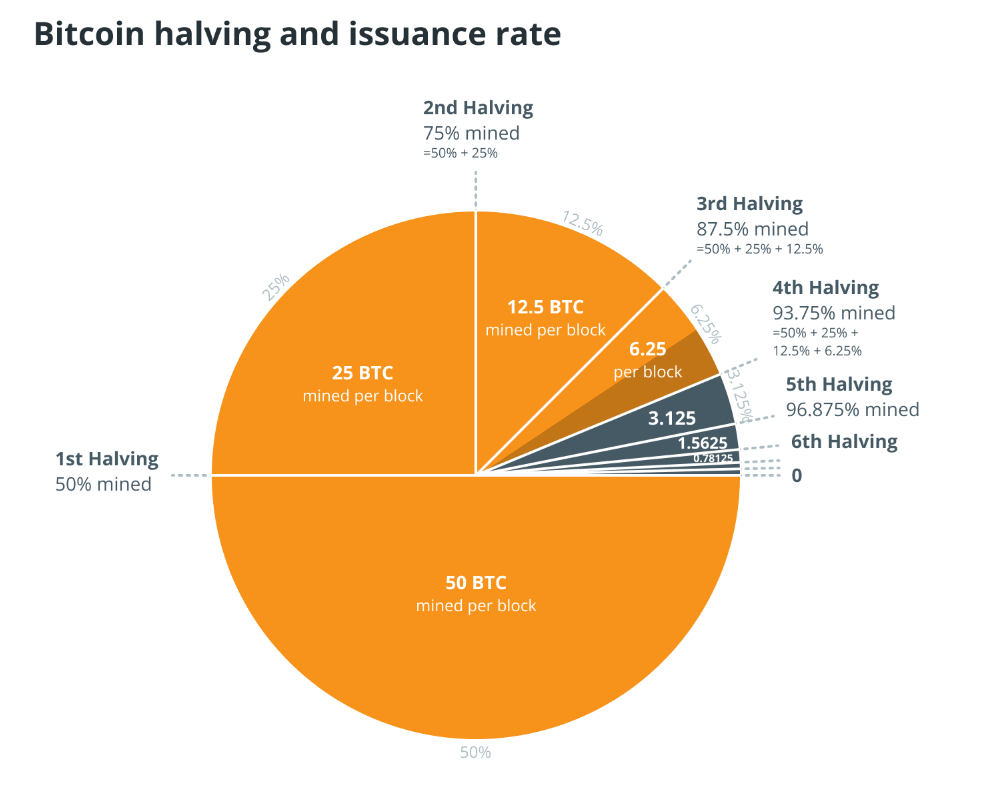
Bitcoin operates on a decentralized network powered by a process called mining, where powerful computers solve complex mathematical problems to validate transactions. When miners successfully complete these tasks, they are rewarded with newly minted Bitcoin. This mechanism not only secures the network but also regulates the introduction of new Bitcoin into circulation, which is crucial for understanding its value. Central to this process are the halving events that occur approximately every four years, decreasing the reward for mining new blocks by half.
Initially, the reward was set at 50 Bitcoin per mined block, but through successive halvings, the reward dropped to 25 Bitcoin in 2012, then to 12.5 Bitcoin in 2016, and further to 6.25 Bitcoin in May 2020. These reductions effectively increase the scarcity of Bitcoin, making it less available and, consequently, potentially more valuable. As we approach each halving, historical trends indicate a corresponding increase in Bitcoin’s price, driven by heightened demand and the realization of its diminishing supply.
Future halving events are scheduled, with the next one expected around 2024, when the reward will once again be cut in half to 3.125 Bitcoin. Ultimately, the mining of the last Bitcoin is projected to occur around 2140, creating a significant point in Bitcoin’s history. Investors anticipate these halvings with great interest, as they are seen as pivotal moments that can influence market sentiment and long-term price trajectories. The limited supply structured by the halving schedule underlines Bitcoin’s unique characteristics, reinforcing its position as a hedge against inflation and an asset that many view as a store of value.
Psychological Impact and the Future of Money
The psychological effects of Bitcoin’s scarcity are profound and contribute to shaping investor sentiment and behavior. As a digital currency with a capped supply of 21 million coins, Bitcoin’s inherent scarcity creates a unique urgency among potential investors. The notion of ‘fomo’—the fear of missing out—drives many to acquire Bitcoin as they race against time, worried that prices will soar irreversibly once the available supply dwindles. This phenomenon is not merely an individual concern; it captures a collective mindset that further inflates demand and drives speculative interest.
Moreover, the fixed supply of Bitcoin challenges traditional notions of currency and value, leading to a reevaluation of what we consider money in the future economy. As more individuals recognize Bitcoin as a scarce asset akin to precious metals, it begins to gain acceptance outside of its traditional role as a transactional currency. Investors increasingly perceive it as a store of value that can withstand inflationary pressures and economic turmoil. This perception may further solidify Bitcoin’s role in the modern financial landscape, encouraging mainstream acceptance and utilization.
As Bitcoin’s prominence grows, so too does its potential to reshape global finance. The movement towards decentralization and away from traditional banking systems may reflect broader societal shifts in how value is perceived and exchanged. With its fixed supply, Bitcoin could instigate a new understanding of wealth and financial security, contrasting sharply with fiat currencies that are subject to inflation and devaluation. The psychological impact of Bitcoin’s scarcity is likely to have lasting consequences on investment behaviors and attitudes towards money, leading to a transformation in value systems in the years to come.