
The Staggering Numbers: U.S. Government’s Crypto Portfolio
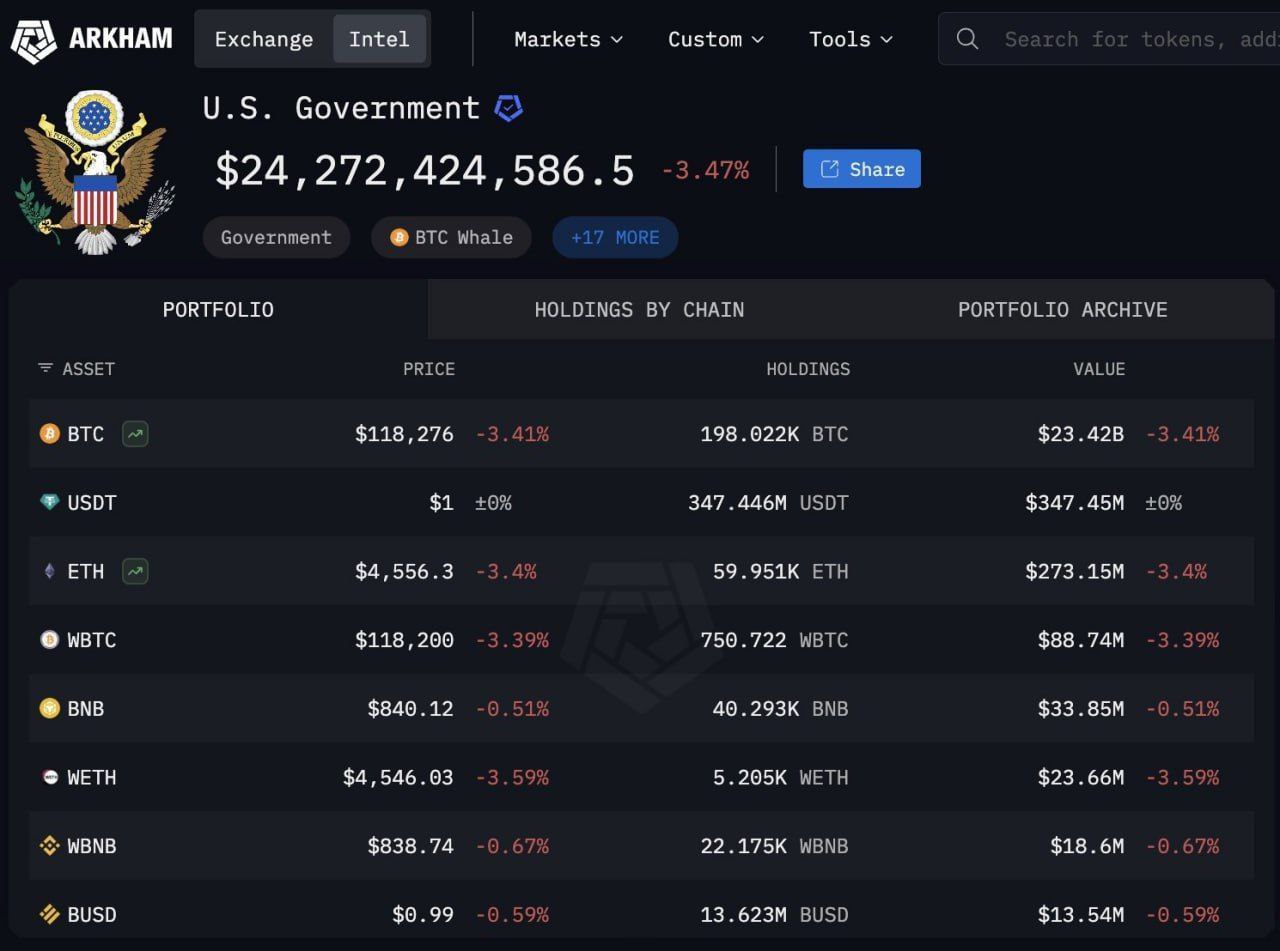
The U.S. government has emerged as one of the most significant players in the cryptocurrency market, with its holdings estimated to be worth approximately $24 billion. This considerable value is largely attributed to a portfolio that includes nearly 200,000 Bitcoin (BTC) and over 59,000 Ethereum (ETH). Such figures not only highlight the government’s extensive investment in digital assets but also underscore its role within the broader cryptocurrency ecosystem.
The government’s Bitcoin holdings amount to a staggering sum, making it one of the largest holders of this digital currency worldwide. Bitcoin has long been regarded as a digital gold, a store of value that has captivated the interest of investors and institutions alike. The significant quantity held by the U.S. government further emphasizes BTC’s perceived legitimacy and importance in the financial landscape.
In addition to Bitcoin and Ethereum, the U.S. government’s crypto portfolio includes a variety of other digital assets, such as Wrapped Bitcoin (WBTC), Binance Coin (BNB), Wrapped Ether (WETH), Wrapped Binance Coin (WBNB), and Binance USD (BUSD). Each of these assets serves unique purposes within the blockchain ecosystem, and their inclusion in the government’s portfolio reflects a diversification strategy that could potentially mitigate risk while capitalizing on the growing adoption of cryptocurrencies.
The significance of these holdings cannot be overstated. As the U.S. government navigates the uncertain waters of regulation and monetary policy regarding digital assets, its large-scale investments may influence market trends and foster broader acceptance of cryptocurrencies. This positioning also raises questions about the implications for future regulatory developments, as the government balances the responsibilities of managing public funds with the opportunities presented by innovative financial technologies.
Market Implications: The Role of Government Holdings in Cryptocurrency Pricing
The U.S. government’s substantial cryptocurrency holding, valued at approximately $24 billion, has raised significant discussion regarding its potential implications for the broader crypto market. As government-backed assets increase within the crypto ecosystem, they may contribute to heightened market stability or volatility, depending on various factors, including market sentiment and external economic conditions. The presence of such considerable holdings introduces unique dynamics that could impact cryptocurrency prices, particularly during periods of market turbulence.
Market analysts and participants have begun to scrutinize the potential influence of government holdings on price movements. For instance, the U.S. government’s buying or selling activities could create substantial shifts in the market, given the volume of assets involved. Should the government decide to liquidate portions of its holdings during a downturn, it may contribute to significant price declines. Conversely, strategic purchases during market corrections could provide much-needed liquidity, fostering recovery incentives for investors. Furthermore, the government’s leverage in the cryptocurrency market could deter excessive speculation, as market players may increasingly factor in the government’s stance when predicting price fluctuations.
In addition to immediate pricing effects, the government’s involvement in the crypto market signifies a step towards greater acceptance and normalization of virtual currencies within traditional financial systems. This perceived endorsement may provide a degree of confidence to institutional investors and other participants, potentially enhancing adoption rates. Moreover, the possibility of the U.S. government utilizing its holdings as a tool for advanced regulations or strategic initiatives presents another layer of complexity. Overall, the implications of the government’s cryptocurrency holdings on market dynamics are significant and warrant ongoing observation as they continue to unfold in response to emerging trends and regulatory environments.
Navigating Legitimacy: The Growing Acceptance of Cryptocurrency
The recent announcement regarding the U.S. government’s $24 billion cryptocurrency holding marks a pivotal moment in the evolving landscape of digital finance. As governments across the globe warm up to the idea of cryptocurrency, this substantial investment emphasizes a shift towards not only acknowledging but embracing digital assets as legitimate financial instruments. The implications of such acceptance extend beyond governmental realms, significantly influencing traditional financial institutions and the overarching regulatory frameworks.
In recent years, cryptocurrencies, once regarded with skepticism, have gradually garnered increased credibility. This evolution can be attributed to a myriad of factors, including rising adoption rates among consumers and businesses, as well as the growing sophistication of blockchain technology. As these digital currencies gain traction, financial institutions are reevaluating their roles within the broader economic ecosystem. Banks and investment firms, initially wary of cryptocurrency, are now exploring ways to integrate cryptocurrencies into their services, such as offering custody solutions or developing cryptocurrency investment products. This pivot indicates an acknowledgement that digital assets are no longer a fleeting trend but a staple of modern finance.
Furthermore, regulatory bodies have begun to engage more actively with the cryptocurrency sector, seeking to establish clear guidelines that can protect consumers while fostering innovation. This constructive dialogue between regulators and crypto stakeholders lends further legitimacy to the notion of cryptocurrencies as viable options for transactions and investment. As regulatory frameworks mature, they provide a clearer path for mainstream adoption, ensuring that both traditional financial players and emerging digital currencies can coexist. Ultimately, the government’s significant stake in cryptocurrencies not only validates this digital asset class but also reshapes public perception, encouraging a more diversified financial ecosystem where cryptocurrency can thrive alongside conventional forms of money.
Transparency and Monitoring: The Role of Platforms like Arkham
The increase in government-held cryptocurrency assets has raised significant questions about transparency and accountability. Governments now possess billions of dollars in digital currencies, necessitating a clear framework for public scrutiny. Platforms like Arkham play an essential role in this landscape, facilitating real-time monitoring of government cryptocurrency holdings and transactions. By leveraging advanced analytics, Arkham allows users to visualize and track movements of these digital assets, fostering an environment of transparency that is crucial in the realm of public finance.
This transparency does not merely serve as a passive observation tool; it actively engages citizens in discussions about government actions regarding cryptocurrencies. By making information readily accessible, platforms like Arkham empower the public to stay informed and critically assess the implications of government involvement in the crypto space. Enhanced transparency contributes to building public trust, as citizens can have assurance that government activities are subject to scrutiny and accountability. When people understand the flow of assets and can verify information, there is a greater likelihood of fostering trust between the public and governmental entities.
<pmoreover, about="" actions="" activities="" align="" and="" around="" as="" avenues="" beyond="" can="" collaborations="" conflicts="" considerations="" constituents.
While the integration of platforms like Arkham into the discourse surrounding government cryptocurrency holdings presents promising prospects for enhanced accountability and transparency, it also underscores an ongoing debate. The balance of oversight must be carefully maintained to protect individual privacy while ensuring public interest remains at the forefront of government operations in the cryptocurrency landscape.