
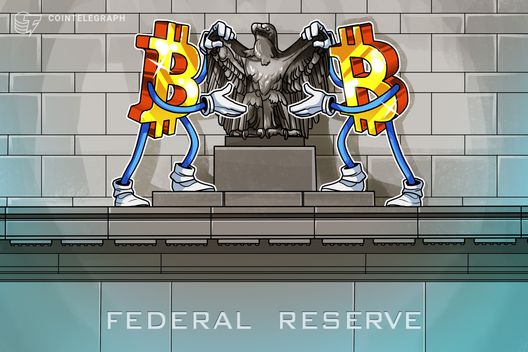
The Federal Reserve’s Monetary Quandary
The Federal Reserve, as the central banking system of the United States, finds itself in a precarious position owing to the ongoing inflationary environment. With persistent inflation rates, the Federal Reserve faces the daunting challenge of determining optimal interest rate policies that will effectively manage economic stability. Cutting interest rates may serve as a temporary relief for financial markets, fostering an environment conducive to borrowing and spending. However, this maneuver carries the inherent risk of exacerbating inflationary pressures, potentially destabilizing the economy further.
In addressing its monetary quandary, the Federal Reserve must navigate a complex landscape characterized by rising tariffs, fiscal deficits, and the diminishing purchasing power of the dollar. Maintaining current interest rates could signify a cautious approach aimed at curbing inflation, yet such a strategy leaves the economy vulnerable. For instance, prolonged elevated tariffs can lead to supply chain disruptions, contributing to higher prices for consumers. Consequently, the combined effect of these policies could precipitate a stagnation in economic growth, all while the costs of goods and services continue to climb.
This intricate balance between stimulating growth and controlling inflation poses an additional dilemma for the Federal Reserve. If the central bank opts to maintain higher interest rates for an extended period, it risks undermining consumer confidence and spending. The delicate interplay between fiscal deficits and monetary policy creates further complexity; expansive government spending can add to inflationary pressures, challenging the Federal Reserve’s objectives. As a result, the dollar faces a gradual decline in purchasing power, leading to increased scrutiny of its role as a stable currency. In light of these challenges, the Federal Reserve must carefully consider its options in the pursuit of monetary stability amidst an increasingly turbulent economic backdrop.
The Case for Bitcoin as a Safeguard
In recent years, Bitcoin has gained attention as a potential safeguard against the rising tides of inflation and monetary instability that challenge traditional fiat currencies. One of the primary reasons for this perception is Bitcoin’s fixed supply. Unlike fiat currencies, which can be printed in response to economic variations, Bitcoin has a capped supply of 21 million coins. This scarcity makes it an attractive alternative for investors seeking to preserve wealth in an era where central banks are increasingly resorting to expansive monetary policies that can lead to currency devaluation.
Furthermore, the decentralized nature of Bitcoin contributes significantly to its appeal as a hedge. Being a digital asset that operates on a peer-to-peer network, Bitcoin is not controlled by any single entity or government. This autonomy shields it from potential manipulations and policies that may destabilize traditional currencies, thus providing a more stable store of value during turbulent economic times. Investors seeking refuge from traditional financial systems can therefore look to Bitcoin as a viable means of securing their assets against both inflation and government overreach.
Additionally, the growing adoption of Bitcoin among institutional investors has reinforced its credibility as a strategic asset. In recent years, a significant number of large corporations and investment funds have begun adding Bitcoin to their portfolios. This trend not only generates increased demand but also enhances Bitcoin’s perceived legitimacy as a secure asset class. As institutional interest continues to rise, Bitcoin is steadily being recognized not solely as a speculative instrument but as a genuine alternative to conventional hedging strategies traditionally employed for wealth preservation.
Overall, Bitcoin’s distinct characteristics make it an increasingly compelling choice for investors looking to mitigate risks associated with monetary instability, ensuring that it continues to play a crucial role in the future of finance.
The Fragility of the Current Economic Model
The contemporary economic model, predominantly guided by traditional monetary policies, faces significant challenges characterized by increasing fragility. As governments engage in unprecedented levels of spending to stimulate their economies, the impact of such policies raises pertinent questions about their efficacy and sustainability. Central banks, particularly the Federal Reserve, rely heavily on instruments like interest rate adjustments to manage inflation and control economic stability. However, these approaches have exhibited limitations, particularly in response to contemporary crises such as supply chain disruptions and geopolitical tensions.
One pressing issue is the inflationary pressure that results from expansive monetary policies. As fiscal stimulus floods the economy, the risk of devaluating currencies intensifies, leading to increased prices for goods and services. The limitations of traditional monetary policies become glaringly evident when confronting multi-faceted challenges, highlighting that mere adjustments to interest rates may not suffice. For instance, amid ongoing economic uncertainties, reliance on monetary policy tools can inadvertently exacerbate systemic instability rather than alleviate it.
Furthermore, the political nature of monetary decisions further complicates the situation. Policy shifts can be influenced by prevailing political agendas rather than grounded economic principles, creating a volatile environment prone to erratic fluctuations. In contrast, Bitcoin presents an avenue of stability amid this instability. Its mathematical foundation, coupled with a finite supply, positions it as a potential hedge against the unpredictability stemming from governmental monetary policies. Unlike traditional currencies, which are subject to manipulation through regulatory frameworks, Bitcoin operates on a decentralized blockchain system, ensuring its value is not directly tied to political decisions.
The implications of these limitations are profound. As the Federal Reserve grapples with balancing inflation control and economic stagnation, the exploration of alternative assets, such as Bitcoin, may emerge as a relevant consideration for safeguarding financial stability in an increasingly uncertain economic landscape.
Conclusion: The Future of Monetary Stability and Bitcoin’s Role
As we contemplate the Federal Reserve’s ongoing monetary policy decisions, it becomes apparent that whether interest rates are lowered or preserved, the implications for the US dollar lean towards depreciation and an increase in inflationary pressures. The inherent instability within traditional fiat currencies raises critical questions about monetary stability and the long-term viability of existing financial systems. In this context, Bitcoin emerges as a compelling alternative, offering unique characteristics that position it as a strategic hedge against possible economic turmoil.
Bitcoin’s decentralized nature and the limited supply, capped at 21 million coins, create an asset that counters the overproduction associated with fiat currencies. As the Federal Reserve considers its options, the prospect of a weakening dollar pushes investors to seek refuge in alternative assets. Consequently, Bitcoin’s appeal grows, particularly among those concerned about the eroding value of their cash savings. Institutional interest in Bitcoin also reflects a broader trend, as hedge funds and other investment entities acknowledge its potential in diversifying portfolios amidst rising economic uncertainty.
Moreover, the behavior of investors is shifting towards greater acceptance of Bitcoin, driven not only by its price volatility but also its utility as a store of value. This transformation underscores a profound behavioral change; individuals and institutions alike are increasingly seeking to protect their wealth from monetary instability. As the global economy continues to face unpredictable challenges, Bitcoin is poised to play a vital role, providing a vehicle for safeguarding value in a world defined by fiscal unpredictability.
In summary, as the Federal Reserve navigates its complex monetary landscape, Bitcoin’s relevance as a hedge against instability will likely solidify. The attributes that define Bitcoin, coupled with the shifting mindset of investors, mark a significant evolution in how we approach financial stability and investment strategies.