
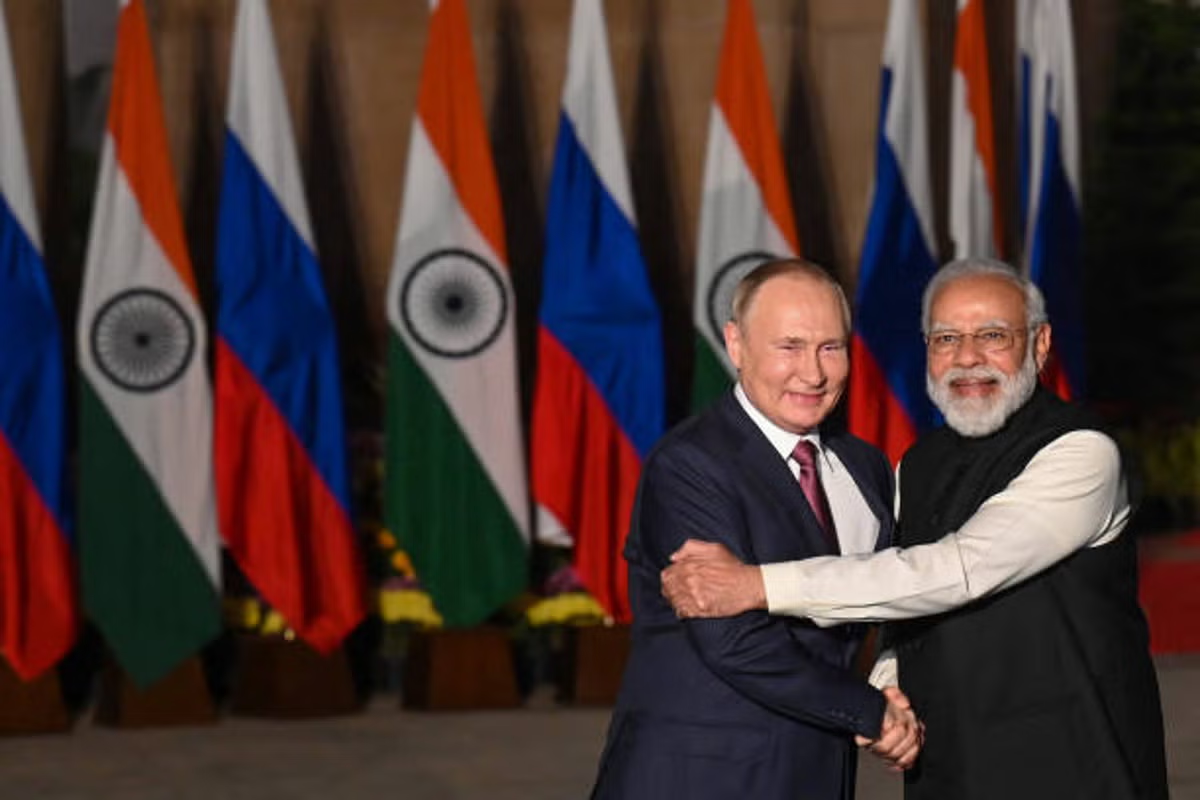
Overview of Russia-India Energy Relations
The energy partnership between Russia and India has deep historical roots, evolving through decades of collaboration in various sectors, particularly in energy. Initiated during the Cold War, this relationship has strengthened significantly in the context of geopolitics, economics, and mutual strategic interests. The two countries have engaged in numerous agreements aimed at enhancing their energy cooperation, focusing primarily on oil, natural gas, and nuclear energy.
One of the most notable agreements was the signing of the Rupee-Ruble trade agreement, which allowed for trade in energy resources without relying on the U.S. dollar. This agreement facilitated oil supply arrangements that have become increasingly vital, especially with the imposition of sanctions on Russia by the United States. The supply of Russian oil to India has surged, positioning India as a key player in mitigating the effects of Western sanctions on Russian exports. The collaboration extends beyond oil imports; joint ventures in liquefied natural gas (LNG) and nuclear energy also signify the depth of this strategic partnership.
The strategic importance of the energy partnership is underscored by India’s need for energy security and Russia’s desire to diversify its customers amid evolving global energy dynamics. Moreover, both nations share a vision for stabilizing energy supplies in a volatile geopolitical environment. This partnership not only aids in the economic development of both countries but also impacts regional energy dynamics, influencing other nations in South Asia and beyond. The growing energy ties between Russia and India reflect a broader shift towards a multipolar world where traditional alliances are reassessed, making this partnership particularly significant.
Mechanisms to Bypass U.S. Sanctions
In recent years, Russia has developed several strategies aimed at circumventing the economic restrictions imposed by the United States, particularly in its energy partnership with India. One of the key measures employed by Russia involves the establishment of a “special mechanism” designed specifically for uninterrupted oil deliveries to India. This initiative facilitates bilateral trade between the two nations, allowing them to navigate the complex global financial landscape shaped by sanctions.
A critical component of this mechanism is the settlement of transactions in Indian rupees, which significantly diminishes the reliance on U.S. dollar-denominated transactions. By conducting trade in rupees, both countries have created a buffer against U.S. financial pressure. This approach helps to decrease transaction costs and minimizes exposure to fluctuations in the value of the dollar, offering India a more stable and predictable trading environment.
Moreover, logistical arrangements have been optimized to ensure a seamless flow of oil from Russia to India. This includes the use of alternate shipping routes and insurance mechanisms that are not subject to U.S. sanctions. Such practices not only facilitate the ongoing exchange of energy resources but also undermine the efficacy of the sanctions imposed by the United States on Russia. The ability to successfully execute these transactions highlights a growing resilience in the Russia-India energy partnership, further solidifying their respective positions in the global energy market.
These mechanisms and strategies employed by Russia and India underscore a significant shift in how countries can approach international trade amidst economic sanctions. The collaborative efforts of both nations present a formidable challenge to the traditional economic leverage wielded by the U.S., thereby reshaping the dynamics of global energy trade.
Impact of Discounted Russian Oil on India’s Energy Needs
As one of the world’s fastest-growing economies, India continues to experience a surge in energy demand, driven by urbanization, industrialization, and population growth. In this context, the availability of discounted Russian oil has emerged as a vital element in India’s energy strategy. These affordable supplies provide an opportunity for India to diversify its energy portfolio while simultaneously mitigating the pressure associated with rising commodity prices globally.
The alignment of India’s energy requirements with the influx of discounted Russian oil significantly contributes to energy security. By purchase agreements with Russia, India reduces its dependence on conventional western oil markets, which are often susceptible to geopolitical complications and price volatility. Consequently, this partnership proves advantageous not only in terms of cost but also in sustaining India’s economic growth trajectory, ensuring that energy supplies remain stable and predictable.
Moreover, the economic implications of utilizing discounted oil extend beyond immediate energy needs. The influx of affordable oil enables industries and manufacturing sectors in India to lower operational costs, thereby enhancing competitiveness in both domestic and international markets. This synergy aligns well with the government’s emphasis on achieving self-reliance through initiatives such as “Make in India.”
However, this partnership is not without its challenges and risks. Relying heavily on Russian oil, especially amidst fluctuating geopolitical climates, can pose potential risks to long-term energy security. The global ramifications of U.S. sanctions on Russia could lead to uncertainty in supply chains, price adjustments, and political ramifications that could affect India’s energy landscape. Balancing these factors while capitalizing on discounted Russian oil presents a complex scenario for India’s energy policymakers.
In conclusion, the inflow of discounted Russian oil serves as a crucial component in addressing India’s energy demands. The advantages it offers, coupled with the inherent risks, will determine the future of this partnership as India strives for energy resilience in an increasingly complex global environment.
The Shifting Dynamics of Global Energy Trade
The evolving partnership between Russia and India signifies a pivotal shift in the global energy landscape, highlighting a departure from traditional energy trade frameworks heavily influenced by U.S. policies. This collaboration underscores the emergence of a multipolar global trading environment, where countries prioritize their energy security and economic interests over alignment with Western powers. As these nations pursue initiatives to strengthen their energy ties, the implications for global trade dynamics are profound.
Russia’s extensive oil reserves offer India a reliable source of energy as it seeks to meet its growing demand. In return, India provides Russia with a substantial market for its energy exports, fostering interdependence that is less susceptible to external pressures from U.S. sanctions. This energy partnership not only demonstrates resilience but also signifies a broader trend where nations are opting for bilateral agreements that circumvent traditional power dynamics. Increased cooperation between Russia and India may encourage other nations to reassess their energy alliances, ultimately altering the flow of oil and gas worldwide.
The realignment of energy partnerships also poses challenges to other significant energy players, particularly those under U.S. influence. As Russia and India solidify their trade relationship, countries like Saudi Arabia and the United States might need to modify their strategies to maintain competitive advantage in an increasingly fragmented market. The geopolitical landscape is shifting, with emerging powers advocating for a more inclusive energy trade system that accommodates various stakeholders. Such transformations in energy flows may lead to new pricing mechanisms, altering the equilibrium of demand and supply within global markets.
Incorporating these evolving dynamics into the broader context of international relations emphasizes the importance of adaptability in energy strategies. The Russia-India partnership serves as a catalyst for discussions around sovereignty, market conditions, and geopolitical influence, reflecting a necessary evolution in how countries navigate the complexities of global energy trade.