
Peter Schiff’s Bearish Outlook on Bitcoin
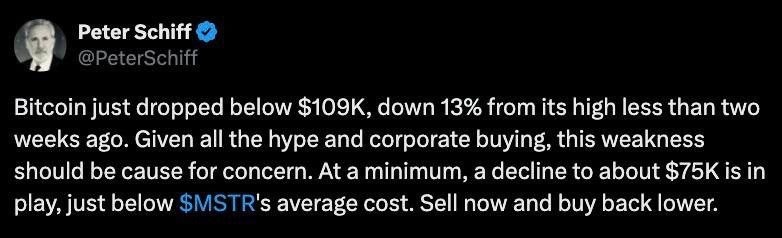
Peter Schiff, a well-known economist and financial commentator, has recently reiterated his cautious stance regarding Bitcoin, suggesting that the cryptocurrency’s price could potentially nosedive to as low as $75,000. Schiff’s skepticism towards Bitcoin is not a new development; he has historically criticized the digital currency, labeling it as a speculative asset rather than a reliable store of value. This long-standing wariness is rooted in his fundamental belief in traditional assets like gold, which he argues offer more stability compared to the erratic nature of cryptocurrencies.
In his recent commentary, Schiff pointed out the substantial price increases Bitcoin has witnessed over the past few months. He argues that such rapid appreciation often paves the way for inevitable corrections. Many investors, drawn to the allure of significant returns, may overlook the inherent volatility associated with cryptocurrencies. Schiff warns that without a solid economic foundation supporting Bitcoin’s valuation, a downturn could be swift and severe. His analysis indicates that the speculative fervor surrounding Bitcoin might soon falter, leaving investors exposed to sharp losses.
Schiff’s perspective is particularly relevant as many investors are grappling with the decision of whether to hold onto their Bitcoin investments amid heightened market fluctuations. He implores investors to consider selling their positions at current price levels, emphasizing a prudent approach to maintaining capital in uncertain times. By advocating for timely selling, Schiff underscores the importance of being vigilant and responsive to market dynamics, especially within the cryptocurrency realm, which he believes is rife with uncertainty and risk. As discussions about Bitcoin’s future continue, Schiff’s cautionary voice serves as a reminder of the potential dangers lurking behind the cryptocurrency’s allure.
Analyzing the Potential for Bitcoin to Fall to $75K
The cryptocurrency market, known for its volatility, is currently experiencing heightened scrutiny regarding the future price movements of Bitcoin. Renowned economist Peter Schiff has recently warned that Bitcoin could potentially drop to $75,000, a statement that has sparked extensive discussion among analysts and investors alike. This forecast prompts an evaluation of the various factors that could influence such a decline and the opposing viewpoints from those who remain optimistic about Bitcoin’s future.
Proponents of Bitcoin argue that the cryptocurrency’s strong fundamentals and growing institutional adoption mitigate the risks of a drastic price drop. Institutions are increasingly recognizing Bitcoin as a digital asset worthy of inclusion in their investment portfolios. This trend is driven by an evolving perception of Bitcoin as a store of value, similar to gold. Moreover, key on-chain metrics show resilience, with increasing transaction volumes and the number of active addresses suggesting sustained interest in Bitcoin. Such indicators often provide bullish signals despite short-term corrections that might occur.
Furthermore, it is essential to acknowledge that corrections are natural in bull markets, and a pullback to $75,000 could represent a broader market adjustment rather than a panic sell-off. Historical analysis of Bitcoin’s price movements illustrates that dramatic fluctuations are part of its growth cycle. Many experts emphasize that while prices can soar, they are equally susceptible to significant declines. Thus, a forecasted drop to $75,000 should be viewed within the context of market cycles and investor sentiment, rather than as solely a negative omen.
Ultimately, investors need to assess their own risk tolerance and investment strategy. While Peter Schiff’s warning highlights potential vulnerabilities in the Bitcoin market, the contrasting perspectives and data provided by bullish analysts suggest that a drop to $75,000, while possible, is not necessarily indicative of a long-term downturn for Bitcoin.
Should Investors Sell Bitcoin Now?
The recent warnings issued by Peter Schiff about a potential decline of Bitcoin to as low as $75,000 have provoked significant contemplation among investors. This creates a pressing dilemma: should Bitcoin holders sell their assets now or hold onto them for the long term? Various factors come into play when navigating this complex decision, and it is essential to consider each investor’s unique profile and circumstances.
For investors leaning towards immediate action, the prospect of selling Bitcoin might seem appealing, especially if they have experienced substantial gains in the past. Selling at what could be perceived as a market high provides the opportunity to lock in profits and potentially reinvest at lower price levels should a decline occur. This approach aligns with a trading strategy focused on market timing and capitalizing on volatility. However, it is paramount to acknowledge that timing the market accurately can be incredibly challenging, and attempting to navigate such fluctuations can often lead to missed opportunities.
On the contrary, long-term holders of Bitcoin may argue against selling based on the cryptocurrency’s historical performance and upward trends over the years. A buy-and-hold strategy has proven effective for many long-term investors, especially considering Bitcoin’s resistance to significant market downturns in the past. Holding could provide investors with a greater chance of benefiting from future price increases, overriding the losses experienced during downturns.
Ultimately, an investor’s decision should align with their risk tolerance, investment goals, and overall strategy. Those who are more risk-averse may find comfort in taking profits now, while others with a higher risk appetite might opt to hold and ride through market fluctuations. Each approach carries its advantages and drawbacks, making it essential for investors to conduct thorough analyses and reflect on their financial objectives before making any decisions regarding their Bitcoin investments.
Conclusion: Navigating Bitcoin’s Future
The recent insights shared by Peter Schiff regarding the potential for Bitcoin to drop to $75,000 have sparked considerable debate within the cryptocurrency community. As an investment, Bitcoin’s future remains uncertain, influenced by broader market conditions and individual perceptions of value. The conversation surrounding this warning has highlighted key themes that resonate with both seasoned investors and newcomers alike.
One significant takeaway is the importance of conducting thorough research and analysis before making any investment decisions in the volatile cryptocurrency market. Investors must understand that price fluctuations are inherent to Bitcoin and other digital currencies. The sentiments expressed by market analysts, like Schiff, serve as a reminder of the need to maintain a balanced perspective on market trends, educating oneself on potential risks and benefits associated with holding Bitcoin.
Moreover, personal conviction plays a crucial role in determining whether to sell or hold Bitcoin. Each investor’s approach is influenced by their individual risk appetite, investment strategy, and long-term financial goals. Those who believe in the potential of Bitcoin as a store of value or a digital asset may choose to weather temporary price dips, while others who are more conservative might consider reallocating their investments in light of bearish projections. Ultimately, the decision to sell or hold should align with one’s own financial objectives and market outlook.
As the crypto landscape continues to evolve, investors should remain cognizant of external factors that may impact Bitcoin’s price. Economic conditions, regulatory developments, and shifts in investor sentiment will all play a role in determining the future trajectory of Bitcoin. Listening to various market analyses, including warnings like those from Peter Schiff, can provide valuable insights, but it is crucial for each investor to evaluate these perspectives within the context of their own financial realities before acting.