
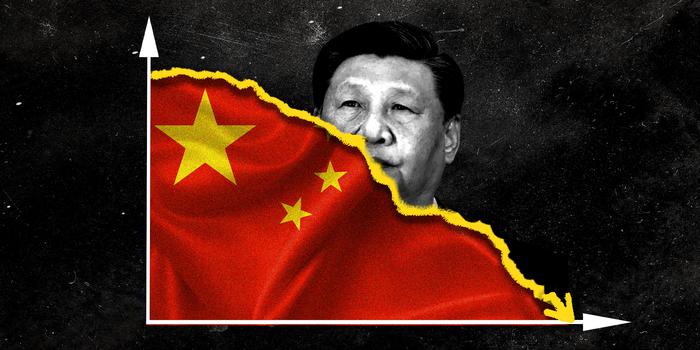

Trump’s Assessment of China’s Economy
President Donald Trump has consistently articulated a critical view of China’s economic standing, emphasizing a series of challenges that he believes undermine its financial stability. Among the primary concerns raised by Trump are the evident declines in industrial activity and the weakening of consumer spending within China. He attributes these problems to a combination of domestic mismanagement and the consequences of international trade tensions. Trump’s narrative suggests that the robust manufacturing sector, once a hallmark of China’s growth, is now facing significant headwinds, placing further strain on the economy.
In addition to industrial struggles, Trump’s remarks often point to the overarching pressures confronting Beijing’s financial system. He suggests that rising debt levels, coupled with a decline in export demand, are creating a precarious situation for the Chinese government. This sentiment resonates with economic analysts who note that the ripple effects of such challenges might extend far beyond China’s borders, influencing global trade dynamics and supply chains. As various sectors face contraction, concerns grow regarding the durability of China’s economic growth model, traditionally reliant on export-led expansion and significant foreign investment.
The implications of these economic hardships for U.S.-China relations warrant careful consideration. Trump positions the United States as resilient, touting the strengths of the U.S. economy as a point of contrast. He asserts that while China grapples with its internal flaws and external pressures, the United States remains on a path of recovery and growth, fueled by innovation and consumer confidence. Such statements not only reflect a strategic positioning in the context of trade negotiations but also set the stage for continued scrutiny of China’s economic policies and their impact on bilateral relations.
SEC Chairman Paul Atkins’ Vision for Cryptocurrency
Amidst the global surge in interest surrounding cryptocurrency, SEC Chairman Paul Atkins has emerged as a prominent advocate for positioning the United States as a leading hub in the crypto space. His vision underscores a multifaceted approach aimed at refining regulatory frameworks that govern the rapidly evolving digital asset landscape. By establishing clear guidelines, Atkins seeks to create an environment that promotes innovation while ensuring the protection of investors.
One of Atkins’ core initiatives revolves around fostering a regulatory climate that encourages technological advancement. He acknowledges that clarity in regulations is essential for businesses and investors to navigate the complex crypto ecosystem confidently. By alleviating uncertainty, the SEC hopes to stimulate growth within the industry, attracting both domestic and international firms to establish their operations in the U.S. This proactive stance not only bolsters innovation but also reinforces the importance of America’s technological prowess on a global scale.
Furthermore, Atkins highlights the competitive nature of the digital asset sector, recognizing that other nations are aggressively positioning themselves to capitalize on the burgeoning cryptocurrency market. To maintain a competitive edge, the U.S. must not only refine its regulatory policies but also embrace collaboration between government entities and the private sector. Such partnerships can pave the way for groundbreaking developments in blockchain technology and cryptocurrency solutions, which stand to benefit the broader economy.
Ultimately, Chairman Atkins’ vision encapsulates the SEC’s commitment to striking a balance between regulatory oversight and the encouragement of innovation. As the cryptocurrency landscape continues to evolve, the importance of robust regulations that foster growth while safeguarding investors becomes increasingly paramount. Through his initiatives, Atkins aims to solidify the United States’ role as a leader in the digital economy, ultimately contributing to a more vibrant and resilient financial landscape.
Geopolitical Implications of Economic Claims
The remarks made by former President Trump regarding China’s economic difficulties carry significant geopolitical implications that are likely to further strain U.S.-China relations. As the world’s two largest economies, any claim about one nation’s financial hurdles has the potential to exacerbate existing tensions, particularly in the context of trade relations and economic competitiveness. Trump’s assertions serve as a narrative that may fuel nationalistic sentiments in both countries, thereby affecting diplomatic ties.
In light of these claims, it is plausible that the Chinese government will react defensively. Beijing may seek to downplay these economic challenges publicly while simultaneously implementing policies to stabilize its economy. This reaction could involve increased investments in technology or infrastructure to maintain economic momentum and public confidence. Furthermore, China’s currency policies may become a focal point, particularly as accusations of currency manipulation often arise in trade discussions, impacting global markets and trade flows.
The struggle for economic dominance between the U.S. and China extends beyond mere trade disputes; it encompasses a broader contest for influence on the global stage. With the rise of new technologies, particularly in the cryptocurrency domain, this economic rivalry may define future geopolitical landscapes. The U.S. has expressed aspirations to position itself as a leader in cryptocurrency and blockchain innovations, which can be perceived as a direct challenge to China’s growing ambitions in these areas. Thus, the intertwining of economic claims and geopolitical strategies is likely to shape future alliances and rivalries, transcending bilateral relations and having long-lasting effects on global politics.
The Future of the U.S. in the Crypto Landscape
The cryptocurrency market in the United States is poised for transformative growth, particularly in light of recent statements by officials such as U.S. Deputy Secretary of the Treasury, Wally Adeyemo, signaling an increasingly supportive attitude towards digital assets. This pro-crypto stance is likely to energize both institutional and retail investors, fostering a more inclusive environment for engaging with cryptocurrencies. As regulatory frameworks evolve to accommodate innovation while addressing security and compliance issues, the U.S. can position itself as a global leader in the digital finance arena.
One of the primary opportunities for the U.S. lies in attracting tech companies and startups focused on blockchain technology. By establishing a regulatory framework that balances innovation with necessary oversight, the U.S. can become a magnet for talent and investment in the cryptocurrency sector. This shift can stimulate job creation and enhance the country’s status as a technology hub. Additionally, universities and research institutions have begun focusing on blockchain education, preparing a future workforce skilled in digital finance, which can further bolster America’s competitive edge in the crypto landscape.
However, challenges remain. Regulatory uncertainty and differing views on how to classify cryptocurrencies can hinder investment and innovation. Market participants often express concern regarding inconsistent regulations, which may lead to a fragmented environment where U.S. companies and investors seek more favorable climates abroad. Still, proactive engagement among regulators, industry leaders, and policymakers can mitigate these risks, creating a collaborative approach that empowers the crypto industry to thrive.
To firmly establish itself as the ‘crypto capital of the world,’ the United States must embrace blockchain technology and cryptocurrency, fostering an ecosystem that supports innovation and protects investors. By leveraging its existing financial infrastructure and regulatory expertise, the U.S. has the potential to lead the charge in shaping the future of digital finance on a global scale.