
Introduction
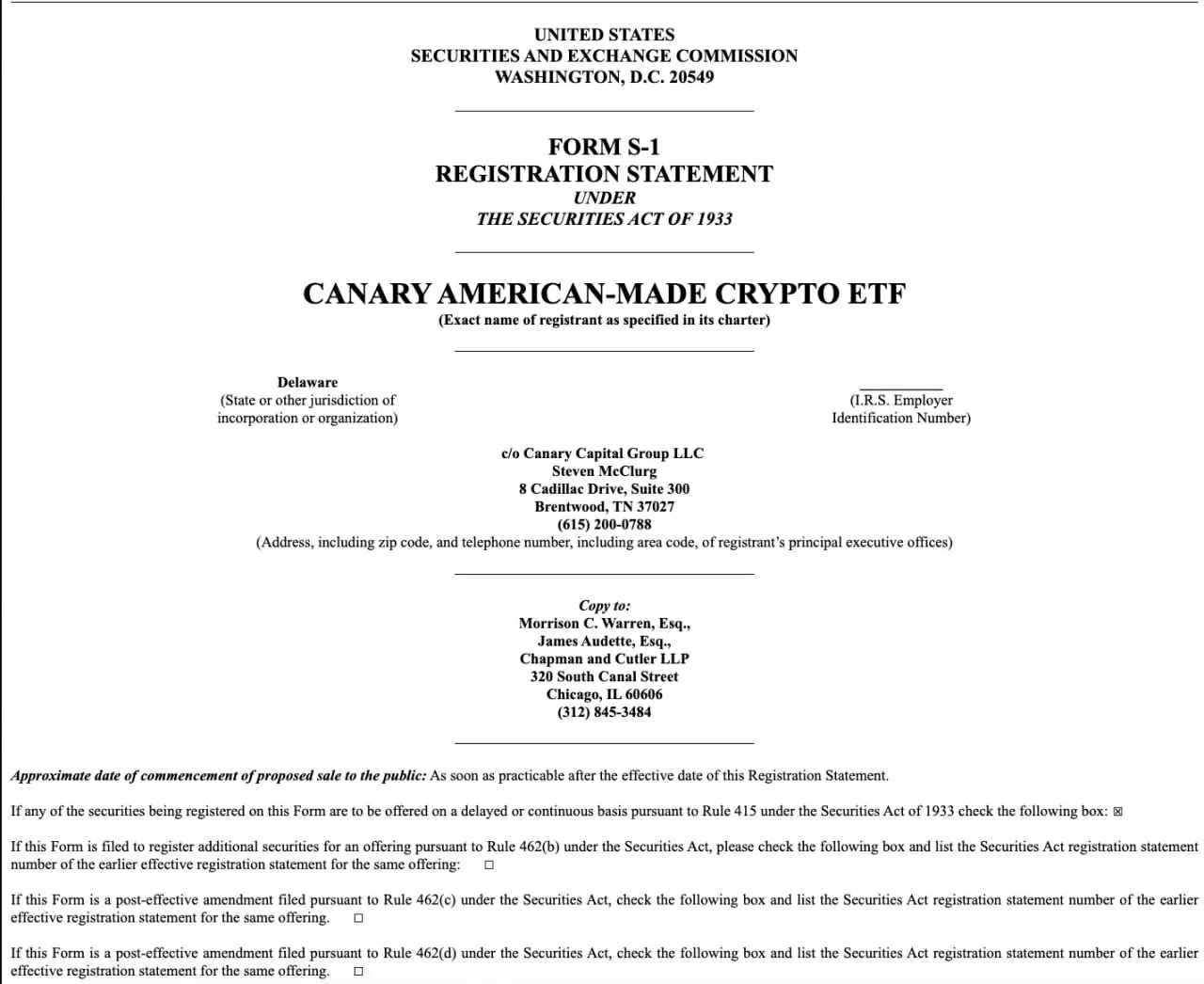
Canary’s recent filing for a U.S.-based cryptocurrency Exchange-Traded Fund (ETF) marks a pivotal moment in the evolution of digital assets. Amidst the growing interest in cryptocurrencies, this initiative represents a strategic response to the increasing demand for regulated investment vehicles that facilitate institutional adoption. By establishing an ETF, Canary aims to bridge the gap between traditional finance and the burgeoning digital currency landscape, offering investors a compliant pathway to engage with cryptocurrencies.
The motivation behind Canary’s filing can be largely attributed to the need for regulatory compliance in a market historically characterized by ambiguity. As regulatory scrutiny intensifies, particularly in the United States, the establishment of a compliant ETF could offer potential investors a level of assurance regarding the legitimacy and safety of their investments. Canary’s initiative not only seeks to align with existing regulatory frameworks but also to promote standardized practices within the cryptocurrency domain.
Furthermore, the potential for institutional adoption is a significant driving force behind this ETF filing. Many institutional investors have expressed hesitance to engage directly with cryptocurrencies due to concerns surrounding security, regulatory uncertainties, and market volatility. A well-structured ETF could serve as a more palatable option, providing these investors with exposure to the cryptocurrency market while mitigating risks commonly associated with direct investments in digital currencies.
Ultimately, the introduction of Canary’s cryptocurrency ETF symbolizes a step towards mainstream acceptance of digital assets. This move could pave the way for more innovative investment products and foster a growing ecosystem where traditional investors feel comfortable participating. As we delve deeper into the implications of this landmark filing, it becomes crucial to analyze the potential impacts on the cryptocurrency market and its future trajectory.
Understanding the New ETF
The newly proposed Canary ETF represents a significant milestone in the evolution of cryptocurrency investment, as it concentrates on U.S.-developed, mined, or operated digital assets. By focusing its investment strategy on domestic cryptocurrencies, the ETF aims to offer a sense of reassurance to investors who may feel uncomfortable venturing into the often volatile and unregulated offshore crypto markets. The emphasis on U.S.-based assets is expected to enhance the level of transparency and regulatory compliance inherent in the ETF, which are crucial factors for many investors.
Among the primary advantages of this ETF is its potential to foster trust within the cryptocurrency market. Regulatory compliance suggests that investors can expect adherence to established financial standards, thus reducing the risks commonly associated with digital asset investments. By operating under the U.S. regulatory framework, the Canary ETF may enhance investor confidence, bridging the gap between traditional finance and the evolving cryptocurrency landscape.
Moreover, the ETF seeks to attract a broader audience, particularly those individuals who have been reluctant to invest in cryptocurrencies due to concerns surrounding market integrity. The structure of the ETF allows for greater oversight, making it a more appealing option for institutional investors as well as individuals previously skeptical about crypto investments. This could lead to increased investment flows into the market, potentially stabilizing price volatility and enhancing overall market maturity.
In essence, the Canary ETF positions itself as a safer investment vehicle that is responsive to the current demand for regulated and transparent investment options in the cryptocurrency sector. By aligning with U.S. regulatory standards and focusing on domestically sourced assets, it aspires to redefine investor perceptions and practices within the digital asset realm.
Potential Impact on the Crypto Market
The filing by Canary for a U.S.-based cryptocurrency exchange-traded fund (ETF) represents a significant moment within the cryptocurrency arena. The introduction of an ETF could yield substantial consequences for the digital asset market. One of the primary implications relates to the credibility that increased regulatory oversight can provide. An ETF regulated by the U.S. Securities and Exchange Commission (SEC) would offer a layer of legitimacy that has been elusive for many cryptocurrencies, particularly as they persist in gaining acceptance among traditional investors.
Moreover, the familiarity that institutions have with ETFs can facilitate broader institutional adoption of cryptocurrencies. With ETFs being a well-known investment vehicle, institutions may find it easier to allocate funds to digital assets through this recognized format. This could lead to higher volumes of institutional investments flowing into the cryptocurrency market, enhancing its overall legitimacy and driving price stability.
In addition to bolstering credibility and institutional engagement, the introduction of a cryptocurrency ETF stands to increase liquidity within the market. As the ETF structure provides a more accessible entry point for retail and institutional investors alike, we may see a surge in demand for U.S.-based cryptocurrencies. Increased liquidity can reduce volatility, making the market more attractive for long-term investors who may have previously viewed digital assets as too speculative.
Furthermore, the ease of purchasing shares in an ETF could entice a new wave of investors who are hesitant to navigate traditional cryptocurrency exchanges. This broadening investor base could lead to a more balanced market ecosystem, fostering the development of additional financial products linked to cryptocurrencies. Therefore, the approval of a U.S.-based cryptocurrency ETF could potentially reshape the landscape for digital assets, marking a pivotal transition in how cryptocurrencies are perceived and valued in the financial markets.
The Significance of Canary’s Move
Canary’s recent filing for a U.S.-based cryptocurrency exchange-traded fund (ETF) marks a significant milestone in the evolving landscape of digital assets. This proactive approach demonstrates not only Canary’s ambition but also the urgent need for regulatory clarity in the cryptocurrency sector. By establishing a framework for a domestic ETF, Canary is setting a precedent in an environment that has been marred by uncertainty and skepticism regarding regulatory practices.
The implications of this move are far-reaching. Firstly, a U.S.-domiciled ETF could potentially unlock substantial capital inflows into the cryptocurrency market. With increasing interest from institutional and retail investors alike, a well-regulated ETF would provide a bite-sized and secure entry point for those hesitant to invest directly in cryptocurrencies. This can lead to a more mainstream acceptance of digital assets while also inviting scrutiny and regulatory engagement that could bolster the reputation of the industry as a whole.
Moreover, Canary’s commitment to legal compliance and investor protection can serve as a model for future funds targeting domestically-operating digital assets. As regulatory bodies grapple with how to regulate cryptocurrencies effectively, the proactive steps taken by Canary may inspire confidence among hesitant investors. By championing transparency and compliance, Canary sets a standard that not only enhances its credibility but also encourages other firms to adopt similar practices, thereby elevating the overall market integrity of cryptocurrency investments.
In this light, Canary’s initiative represents a pivotal moment in the cryptocurrency sector, as it navigates through prevailing uncertainties. As more companies follow suit, the regulatory environment may evolve, leading to the establishment of norms that prioritize investor security while fostering innovation within the digital economy.