
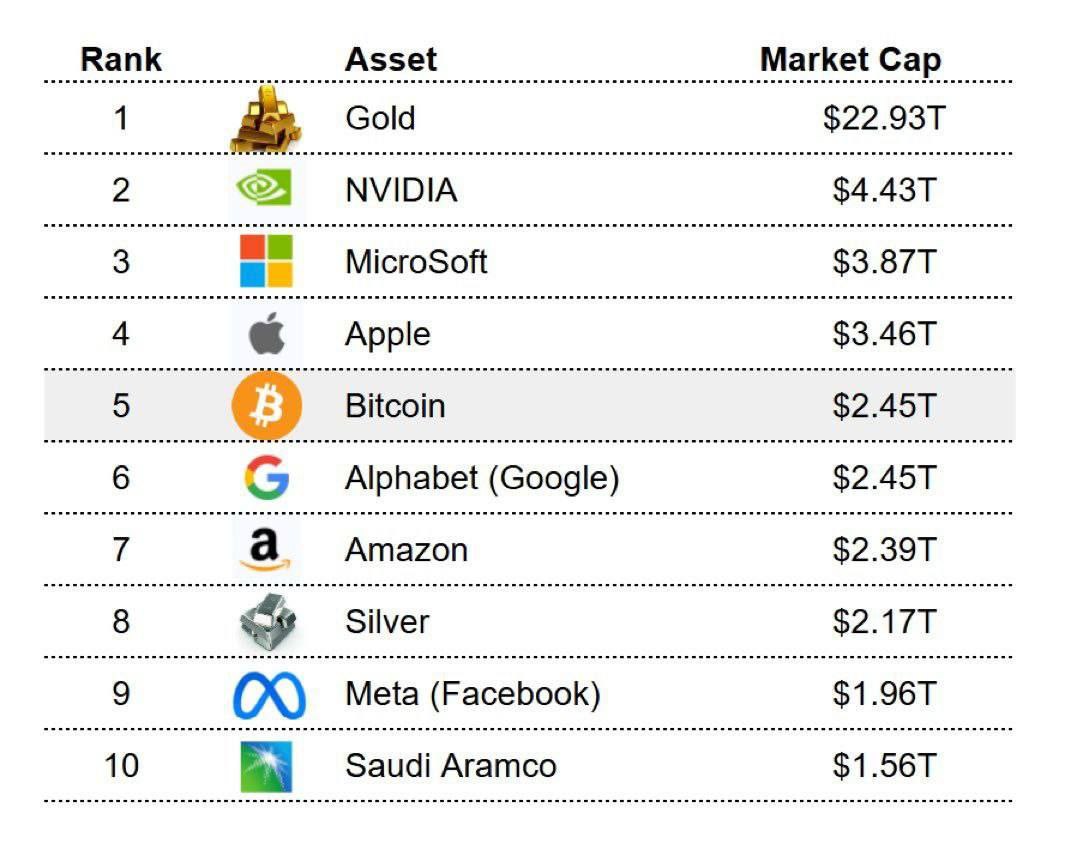
Bitcoin’s Historic Milestone
The recent achievement of Bitcoin surpassing Google in market value represents a significant turning point in the financial landscape. This historic moment encapsulates the rise of cryptocurrency as a formidable asset class, reshaping both investment philosophies and financial strategies globally. Bitcoin, which was once considered a niche market option, has now asserted itself as a mainstream financial instrument, raising questions about the future dynamics between traditional finance and digital currencies.
As Bitcoin’s market capitalization eclipsed that of Google, it became evident that cryptocurrencies are settling into a critical role within the financial ecosystem. This milestone reflects increased consumer confidence in Bitcoin and signifies a paradigm shift where digital assets are viewed as viable alternatives to conventional investments. Investors are increasingly acknowledging Bitcoin not just as a speculative asset, but as a genuine store of value, akin to gold. This growing recognition may lead to greater adoption across various sectors, altering how wealth is measured and accumulated in the 21st century.
Moreover, analysts are noting the implications of this shift for both individual and institutional investors. This newfound status of Bitcoin could catalyze the diversification of investment portfolios, encouraging more people to allocate capital towards cryptocurrencies as part of their long-term strategies. The parity established with major corporations like Google also invites institutional interest, promising an influx of capital that can stabilize and drive further growth within the cryptocurrency market. Consequently, this historic milestone serves as both a landmark achievement for Bitcoin and a portent of a changing financial landscape where digital currencies are poised to become essential components of modern investment strategies.
Factors Fueling Bitcoin’s Ascent
Bitcoin has experienced a remarkable rise in market capitalization, driven by several key factors that have reshaped perceptions of digital currency. One prominent influence is the growing institutional adoption of Bitcoin, which has provided a new level of legitimacy to this cryptocurrency. Notable companies, such as Tesla and MicroStrategy, have incorporated Bitcoin into their financial strategies, allocating significant amounts of capital to this digital asset. Their actions highlight Bitcoin’s potential as a credible store of value, akin to traditional assets like gold. This strategic shift signals to both businesses and consumers that Bitcoin is no longer just a speculative investment, but a viable alternative in long-term financial planning.
In addition to institutional interest, mainstream acceptance has played a pivotal role in Bitcoin’s ascent. Financial institutions, payment processors, and even governments are increasingly recognizing the value of cryptocurrencies, with Bitcoin leading the charge. Services such as PayPal have begun allowing users to buy, hold, and sell Bitcoin, which has vastly expanded access to the cryptocurrency for everyday individuals. Consequently, this rise in accessibility has drawn a wave of retail investors eager to capitalize on Bitcoin’s potential for significant returns, thus propelling its market presence further.
Furthermore, the cryptocurrency market’s volatile yet lucrative nature cannot be overlooked. Bitcoin’s price fluctuations often attract investors seeking high-risk, high-reward opportunities. This volatility encourages speculation among traders who aim to benefit from price swings, fostering a dynamic trading environment. As more participants enter this market, fueled by the desire for substantial gains, Bitcoin’s valuation experiences upward momentum. Collectively, these factors — institutional adoption, mainstream acceptance, and market volatility — have contributed to the extraordinary ascension of Bitcoin and its emergence as a key player in the broader financial landscape.
The Symbolism Behind Surpassing Google
The surpassing of Google by Bitcoin symbolizes a profound transformation in the financial and technological landscapes. For decades, Google has been a dominant force within the tech industry, epitomizing efficiency, innovation, and corporate strength. In contrast, Bitcoin, as a decentralized digital currency, represents a shift towards individual empowerment and control over financial resources. This significant transition underscores a broader change in the balance of power, where traditional corporations may no longer hold exclusive authority over information and wealth.
Supporters of Bitcoin view this event as a validation of its value proposition, where the decentralized nature of the cryptocurrency challenges conventional financial systems. They argue that Bitcoin provides an alternative to traditional wealth distribution models, offering a form of inclusivity that allows individuals from various socio-economic backgrounds to participate in a financial ecosystem that is often inaccessible. Bitcoin’s characteristics, such as its transparent ledger and limited supply, enhance its appeal as an asset that could democratize wealth allocation, shaking the foundations of established financial hierarchies.
On the other hand, critics of this shift caution against the inherent volatility associated with Bitcoin and other cryptocurrencies. Concerns surrounding regulatory oversight and the potential for financial bubbles are prevalent among skeptics, who argue that the rapid ascent of Bitcoin might lead to unforeseen consequences for both individuals and the broader economic system. They emphasize the importance of a balanced approach that incorporates regulation to ensure consumer protection, stability, and the integrity of the financial system. This duality of opinion highlights the complexities involved in navigating the future of finance as Bitcoin’s prominence continues to challenge traditional paradigms.
The Future of Bitcoin: Challenges and Opportunities
As Bitcoin continues its ascendance within the global financial landscape, it is pivotal to consider both the challenges and opportunities that lie ahead. Financial analysts are increasingly vocal about their perspectives on this cryptocurrency, particularly in the context of its rising valuation against traditional tech giants such as Amazon and Apple. The multifaceted nature of Bitcoin, characterized by its decentralized architecture and limited supply, presents a unique opportunity for innovation in wealth creation and distribution.
However, the path forward is not without hurdles. The volatility inherent in the cryptocurrency market poses significant risks for investors, leading to volatile price fluctuations that could prompt market corrections. Analysts suggest that these corrections could disrupt the trajectory of Bitcoin, compelling stakeholders to approach investments with caution. The unpredictable nature of regulatory frameworks across different countries further complicates this landscape; governments may impose stricter regulations on Bitcoin usage and trading, which could ripple throughout the market and influence investor confidence.
Despite these challenges, the potential for Bitcoin to continue redefining wealth and the concept of finance is immense. Its role as a digital asset transcends mere financial speculation; it signifies a possible transformation of the traditional financial paradigm. With advancements in blockchain technology, Bitcoin’s infrastructure may enhance transaction efficiency, encourage financial inclusion, and empower individuals otherwise excluded from conventional banking systems. In the long run, this evolution may pave the way for a reimagined financial ecosystem where digital currencies are not only accepted but also celebrated as central to economic interactions.
In conclusion, Bitcoin’s journey reflects the intersection of technology and finance, indicating a potential paradigm shift. As it navigates its challenges and exploits its opportunities, Bitcoin remains a pivotal figure in shaping not only economic models but also global financial practices.