
I. Executive Summary: Navigating Short-Term Volatility with Long-Term Vision
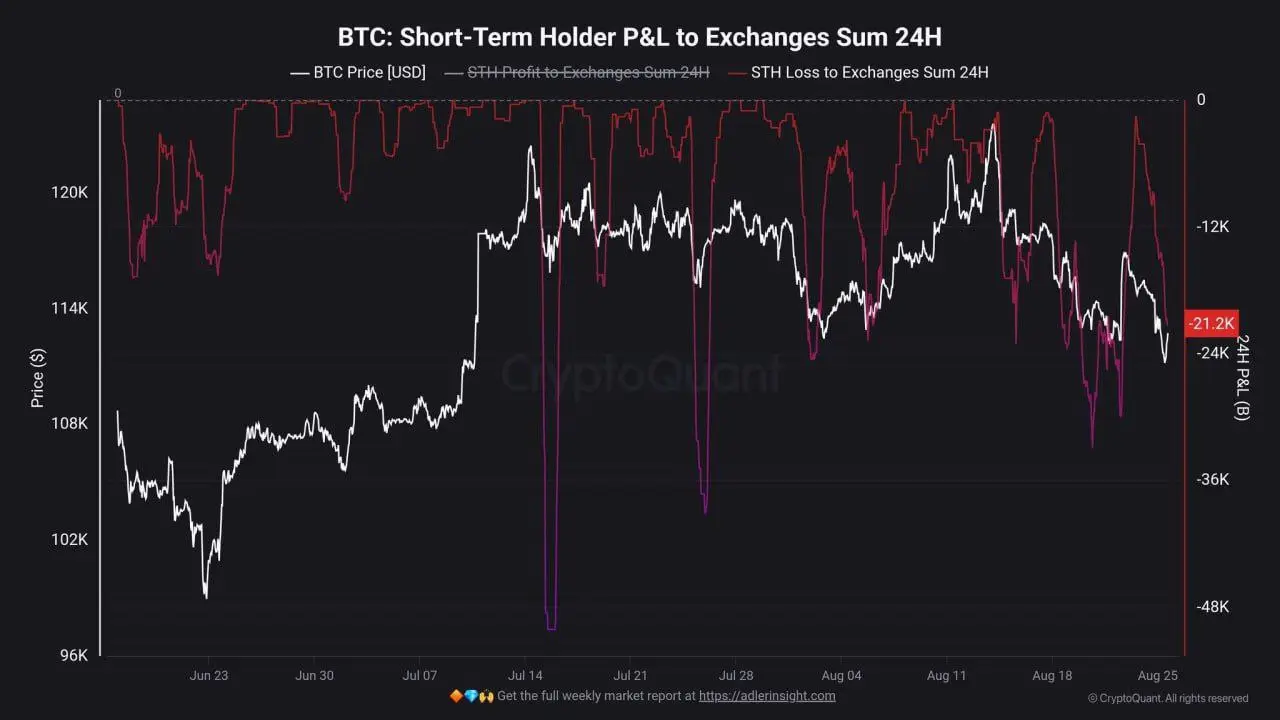
The cryptocurrency market is a dynamic arena, often characterized by rapid price swings and emotional trading. Recent on-chain data highlights a classic pitfall for many new investors: the tendency to panic sell during downturns. In the last 24 hours, short-term Bitcoin holders (STHs), often dubbed “paper hands,” collectively sent 21,200 BTC to exchanges at a loss. This significant volume of loss-making transactions underscores a critical mistake made by many, emphasizing the importance of a disciplined, counter-cyclical investment strategy: “buy the dip, sell the rip.”
This article will delve into why short-term holders are selling at a loss, the definition and impact of “paper hands” in the crypto market, and crucially, how to avoid this common mistake. We will explore the psychological traps of fear and greed, provide practical strategies for identifying true buying opportunities (the “dip”), and guide you on how to secure profits during market rallies (the “rip”). Our goal is to equip you with the knowledge and tools to transcend the short-term noise and build a resilient Bitcoin investment strategy focused on sustainable growth.
II. The Anatomy of a Panic Sell: 21,200 BTC Sent to Exchanges at a Loss
The recent movement of 21,200 BTC by short-term holders (STHs) to exchanges at a loss is a stark reminder of the emotional rollercoaster that is crypto investing. This isn’t just a number; it represents thousands of individual decisions, driven by fear and a lack of a clear strategy.
Who are “Short-Term Holders” (STHs)?
Glassnode defines Short-Term Holders as entities that have held their Bitcoin for less than 155 days.[1] These investors are typically newer to the market, more sensitive to price fluctuations, and more likely to react emotionally to volatility. They often lack the conviction or the long-term perspective of seasoned investors, making them prone to selling during periods of market stress. When the price dips below their acquisition cost, the psychological pressure to “cut losses” becomes immense.
Why Are They Selling at a Loss?
Several factors contribute to STHs selling at a loss:
- Fear of Further Decline: When Bitcoin’s price drops, the fear that it will fall even lower can overwhelm rational decision-making. Investors who bought near a local top may see their unrealized gains turn into losses, leading to panic.
- Lack of Capital or Liquidity: Some STHs might be over-leveraged or need to free up capital for other commitments, forcing them to sell regardless of price.
- Absence of a Strategy: Many short-term traders enter the market without a clear entry or exit strategy. They buy based on FOMO (Fear Of Missing Out) during a rally and sell based on FUD (Fear, Uncertainty, Doubt) during a correction.
- Influence of “Paper Hands” Mentality: The term “paper hands” refers to investors who lack conviction and sell their assets at the first sign of trouble, often at a loss. This mentality is contagious and can lead to cascades of selling.
The Impact on the Market
While 21,200 BTC represents a fraction of the total supply, such significant loss-making transactions have several impacts:
- Increased Selling Pressure: These transactions add to the supply of Bitcoin on exchanges, contributing to further downward price pressure.
- Psychological Contagion: The visible capitulation of STHs can reinforce bearish sentiment and encourage other hesitant investors to sell.
- Transfer of Wealth: Crucially, every BTC sold at a loss by an STH is often bought by a long-term holder (LTH) or a strategic investor, who sees the dip as an opportunity. This represents a transfer of wealth from impatient hands to patient hands.
III. Don’t Be “Paper Hands”: The Psychology of Smart Investing
The term “paper hands” is more than just slang; it describes a critical psychological flaw in investing. To avoid being a “paper hand,” one must understand and counteract the powerful emotions of fear and greed that drive irrational decisions.
Understanding “Paper Hands” vs. “Diamond Hands”
- Paper Hands 📉: Investors who sell their assets prematurely, often at a loss, due to fear, impatience, or lack of conviction. They are easily swayed by short-term market fluctuations and emotional responses.
- Diamond Hands ✨: Investors who hold onto their assets despite significant market volatility or downturns, demonstrating strong conviction in their long-term investment thesis. They understand the underlying value and are willing to weather the storms.
Overcoming Fear and Greed
- Fear (FUD): The fear of losing money is one of the strongest emotions in investing. When prices drop, the instinct is to sell to prevent further losses. However, for assets with strong fundamentals like Bitcoin, severe dips often represent the best buying opportunities.
- Greed (FOMO): The fear of missing out on gains often drives investors to buy at market tops, only to see prices correct shortly after. This leads to buying high and selling low – the opposite of a profitable strategy.
Building a Resilient Mindset
- Develop a Long-Term Thesis: Understand why you are investing in Bitcoin. Is it a hedge against inflation? A store of value? A revolutionary technology? A strong conviction in its fundamentals will help you ride out volatility.
- Set Clear Goals: Define your investment objectives and time horizon. This provides a roadmap and reduces the likelihood of impulsive decisions.
- Control Emotions: Recognize when fear or greed is influencing your decisions. Step away, review your thesis, and stick to your strategy.
- Educate Yourself: Continuous learning about Bitcoin, blockchain technology, and market cycles empowers you to make informed decisions rather than emotional ones.
IV. Buy the Dip: Identifying Strategic Entry Points
“Buy the dip” is a widely celebrated strategy in crypto, but successfully executing it requires more than just optimism. It demands careful analysis, patience, and an understanding of market dynamics.
What Constitutes a “Dip”?
A “dip” is a significant price correction from a recent high. It’s not just any small pullback; it’s a noticeable drop that indicates a temporary imbalance between supply and demand, often driven by profit-taking or short-term panic.
Strategies for “Buying the Dip”:
- Dollar-Cost Averaging (DCA): This is perhaps the simplest and most effective strategy for buying dips. Instead of trying to perfectly time the market bottom, you invest a fixed amount of money at regular intervals (e.g., weekly or monthly), regardless of the price. This averages out your purchase price over time, reducing risk and taking advantage of market fluctuations.
- Keyword Integration: Bitcoin DCA strategy, best crypto investing strategy, long-term Bitcoin growth.
- Technical Analysis (TA): For more active investors, TA can help identify potential support levels where a bounce is likely.
- Key Indicators to Watch:
- Moving Averages (e.g., 200-day MA): Prices often find strong support at long-term moving averages.
- Relative Strength Index (RSI): An RSI below 30 often indicates oversold conditions, suggesting a potential rebound.
- Fibonacci Retracements: These can help identify potential bounce zones after a price correction.
- Keyword Integration: Bitcoin technical analysis, crypto support levels, RSI indicator Bitcoin.
- Key Indicators to Watch:
- On-Chain Analysis: Platforms like Glassnode offer invaluable insights into network activity and investor behavior, helping to confirm a dip as a genuine buying opportunity.
- Key On-Chain Metrics:
- MVRV Z-Score: When this metric enters the green zone, it historically indicates undervaluation and strong buying opportunities.
- Realized Price: A price dip below the Realized Price of short-term holders can signal capitulation and a potential bottom.
- Exchange Net Position Change: A net outflow of BTC from exchanges suggests accumulation, indicating strong demand.
- Keyword Integration: Bitcoin on-chain metrics, Glassnode analysis, Bitcoin valuation, long-term holder accumulation.
- Key On-Chain Metrics:
- Fundamental Analysis: Ensure the dip isn’t due to a fundamental flaw in the asset. For Bitcoin, its fundamentals (decentralization, scarcity, network security) remain strong, making dips more likely to be temporary.
- Keyword Integration: Bitcoin fundamentals, why invest in Bitcoin, future of Bitcoin.
V. Sell the Rip: Securing Profits and Managing Risk
While “buy the dip” gets all the glory, “sell the rip” is equally crucial for long-term success. It’s about taking profits strategically, managing risk, and avoiding the greed that can turn gains into losses.
What Constitutes a “Rip”?
A “rip” is a significant price rally or a sustained period of upward movement, often reaching new local highs or pushing towards all-time highs. It’s when the market is euphoric, and the fear of missing out (FOMO) is prevalent.
Strategies for “Selling the Rip”:
- Set Profit Targets: Before you even buy, have a clear idea of your desired profit level. This could be a fixed percentage gain, a specific price point, or based on technical indicators.
- Keyword Integration: Bitcoin profit-taking strategy, crypto exit strategy, securing crypto gains.
- Partial Profit-Taking: You don’t have to sell your entire position at once. Consider selling a portion (e.g., 25-50%) when your target is hit. This allows you to secure profits while retaining exposure to further upside.
- Keyword Integration: Partial profit-taking crypto, managing Bitcoin profits, scaling out positions.
- Trailing Stop-Loss Orders: This allows you to protect your gains by setting a stop-loss that moves up with the price. If the price reverses, your position is automatically sold at a predetermined level, locking in most of your profits.
- Keyword Integration: Trailing stop-loss Bitcoin, risk management crypto, protecting crypto gains.
- Rebalance Your Portfolio: As Bitcoin’s price surges, it might take up a larger percentage of your overall portfolio. Selling some to rebalance allows you to diversify back into other assets or stablecoins, reducing overall risk.
- Keyword Integration: Crypto portfolio rebalancing, diversify crypto assets, managing crypto risk.
- Utilize On-Chain Signals for Exits: Just as on-chain data can signal buying opportunities, it can also highlight potential market tops or periods of extreme overvaluation.
- Key On-Chain Metrics for Exits:
- MVRV Z-Score (Red Zone): When this metric enters the red zone, it historically signals overvaluation and potential market tops.
- SOPR (Spent Output Profit Ratio): High SOPR values, especially when consistently above 1, indicate significant profit-taking.
- Long-Term Holder (LTH) Distribution: When LTHs begin to distribute their coins heavily, it often precedes market corrections.
- Keyword Integration: Bitcoin market top indicators, on-chain exit signals, when to sell Bitcoin.
- Key On-Chain Metrics for Exits:
VI. Conclusion: Your Path to Becoming a “Diamond Hand” Investor
The recent capitulation of 21,200 BTC by short-term holders at a loss serves as a potent reminder of the perils of emotional investing. While the allure of quick gains is strong, the most successful investors in the Bitcoin market are those who demonstrate patience, discipline, and a clear, data-driven strategy. Don’t fall victim to the “paper hands” mentality driven by fear and FOMO.
Instead, embrace the principles of “buy the dip, sell the rip.” This counter-cyclical approach, supported by robust on-chain analytics, technical indicators, and a strong fundamental understanding of Bitcoin, empowers you to turn market volatility into opportunity. By strategically entering during corrections and systematically taking profits during rallies, you position yourself not just to survive, but to thrive in the dynamic world of cryptocurrency.
Cultivate a “diamond hands” mindset. Understand your investment thesis, manage your emotions, and leverage the wealth of data available to make informed decisions. The path to becoming a successful Bitcoin investor lies in diligent research, strategic execution, and unwavering conviction in the long-term potential of this revolutionary asset.