
The Rumors of Liquidation: A Misunderstanding
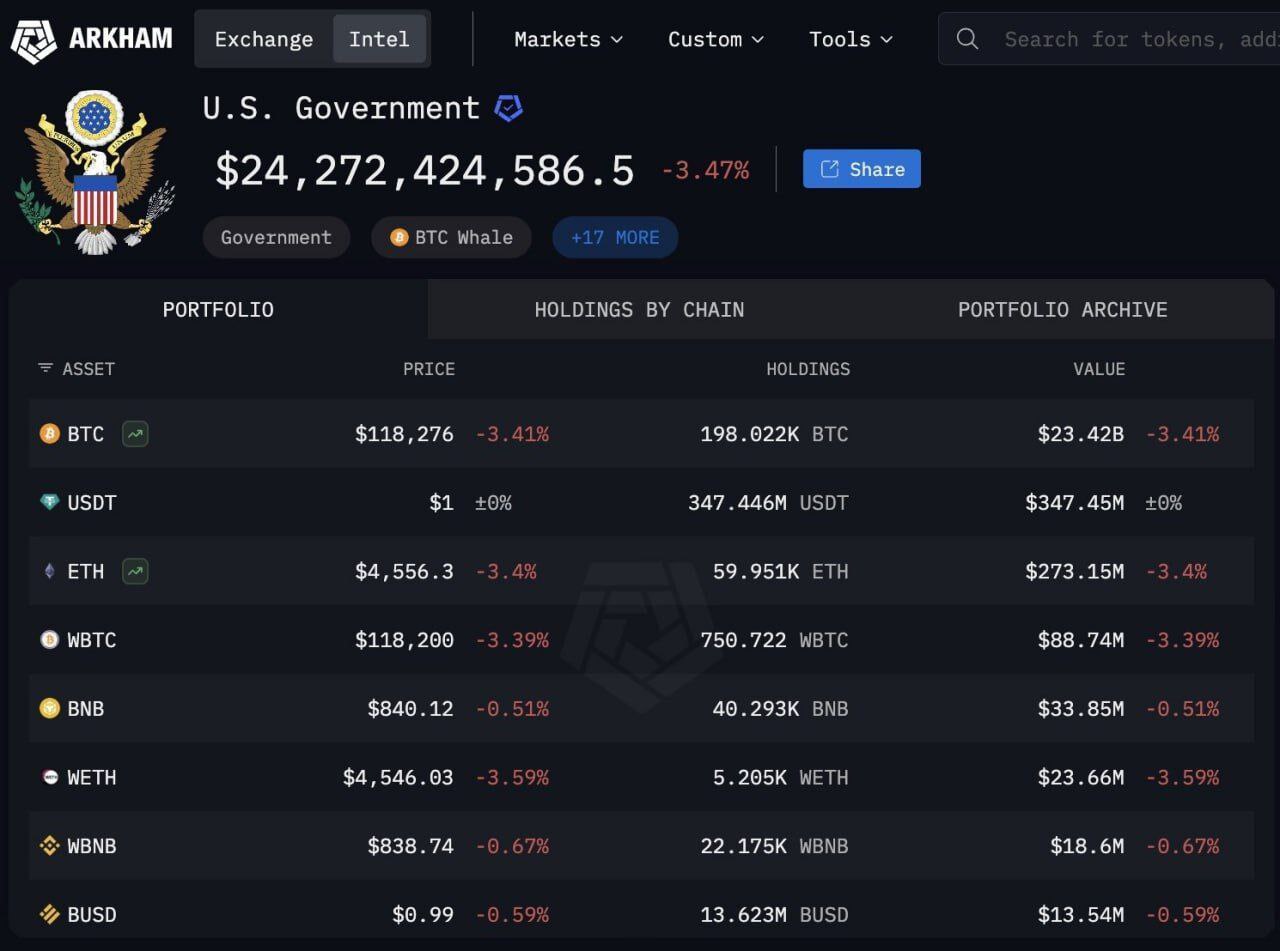
In recent weeks, the cryptocurrency market has been rocked by rumors indicating that the U.S. government had liquidated a substantial portion of its Bitcoin holdings. These claims have sparked widespread concern and speculation among traders and investors alike, leading to fluctuations in Bitcoin’s market price. However, a thorough analysis by blockchain analytics firm Arkham Intelligence has clarified that these assertions are unfounded. The persistence of these rumors highlights a significant disconnect between public perception and actual circumstances surrounding governmental cryptocurrency assets.
The rumors originated from several social media posts and speculative articles that suggested unusual wallet activities linked to government-controlled Bitcoin holdings. These conversations gained traction quickly, with many in the crypto community interpreting even marginal movements as signs of liquidation. Such interpretations, largely fueled by a lack of understanding of Bitcoin’s blockchain transparency, can easily mislead stakeholders who rely heavily on market sentiment for their trading strategies.
The immediate public reaction to these rumors was one of anxiety and uncertainty. Many traders responded by offloading their assets in anticipation of a market downturn, which subsequently led to increased volatility. This kind of market reaction underscores the profound effect of misinformation on trader confidence and market stability. The crypto space, often characterized by its price sensitivity to news and speculation, can experience significant repercussions from false narratives, as seen in this instance.
Ultimately, the U.S. government’s existing Bitcoin holdings remain intact, and a full liquidation appears to be an unlikely scenario. Addressing the misinformation that circulates within the cryptocurrency community is crucial for all stakeholders, as it helps align perceptions with reality and ensures a more stable trading environment moving forward. To maintain trust and stability in the market, it is essential for investors and traders to seek accurate information and analyses, especially amidst periods of volatility and correction.
Current Status of U.S. Bitcoin Holdings
As of late July 2025, the U.S. government is estimated to possess around 198,000 Bitcoin (BTC), which translates to a significant valuation of approximately $24 billion. These assets stem primarily from various law enforcement activities, including seizures linked to illegal activities, which have been conducted over the years. The distribution of these holdings has been primarily among key government agencies such as the Federal Bureau of Investigation (FBI), the Department of Justice (DOJ), the Drug Enforcement Administration (DEA), and various U.S. Attorney’s Offices across the nation.
In examining the specifics of these holdings, it is essential to note that the government maintains a distinct strategy when dealing with Bitcoin. Unlike many institutional investors who actively trade their digital assets to capitalize on market fluctuations, these government wallets have demonstrated a notable inactivity over the past four months. This standstill has sparked discussions regarding the implications of maintaining these assets without any intention to liquidate or convert them into cash or other assets. The inactivity suggests a strategic approach where Bitcoin is viewed less as a speculative asset and more as a form of a strategic reserve, much like traditional commodities such as gold.
This categorization of Bitcoin as a strategic reserve aligns with the broader governmental perspective on cryptocurrencies. By holding significant amounts of BTC, the U.S. government signals a long-term commitment to the digital asset space. This strategy potentially reflects an understanding that, given the inherent volatility of cryptocurrencies, a stable holding pattern may ultimately serve better interests in maintaining the value of these assets over time. As market conditions continue to fluctuate, the U.S. government’s Bitcoin holdings remain an essential component of its asset portfolio strategy.
The Strategic Bitcoin Reserve: A Shift in Government Approach
The U.S. government’s evolving perspective on cryptocurrencies is exemplified by President Trump’s executive order issued on March 6, 2025, which declared the establishment of a strategic Bitcoin reserve. This significant development signals a notable shift in how digital assets are viewed within the governmental sphere, transitioning from skepticism to strategic acceptance. The executive order highlights a growing recognition of Bitcoin not merely as a speculative investment, but as a viable component of national financial strategy.
The rationale behind incorporating Bitcoin and other digital currencies into national reserves stems from the increasing prominence of cryptocurrencies in global finance. Governments worldwide are now acknowledging that digital assets hold intrinsic value and can potentially enhance their monetary policy frameworks. Bitcoin, with its decentralized nature and limited supply, is seen as a hedge against inflation and economic instability. By treating Bitcoin as a strategic reserve, the U.S. government positions itself to better navigate the complexities of modern financial systems influenced by innovations in blockchain technology.
Moreover, the establishment of a strategic Bitcoin reserve is likely to yield several benefits. First, it could enhance national security by reducing reliance on traditional financial systems that are more susceptible to external disruptions. Additionally, such a reserve could attract foreign investment and improve the U.S.’s competitive standing in financial markets dominated by other major currencies. The strategic approach to Bitcoin may also facilitate a more structured regulatory framework, allowing government agencies to establish clearer guidelines for crypto transactions and investments, ultimately fostering innovation while mitigating risks associated with unregulated markets.
This evolving governmental strategy signifies not just a reaction to market trends but also reflects a proactive measure to harness the potential benefits of cryptocurrencies, indicating a future where digital assets are integral to fiscal policy and economic security.
Implications for the Cryptocurrency Market
The recent revelation that the U.S. government holds in excess of $24 billion in unmoved Bitcoin presents vital implications for the broader cryptocurrency market. Given the significant amount of Bitcoin held by the government, its decision to avoid liquidation plays a crucial role in influencing market stability. Investors often look to government actions as signals, and as such, the government’s choice to retain these assets may foster confidence among market participants, suggesting a belief in the long-term viability of Bitcoin as a store of value.
The decision to hold instead of liquidate implies a strategic stance, potentially aimed at supporting the integrity of the Bitcoin market during turbulent times. This approach may reduce the chances of sudden market sell-offs, which can arise from large asset liquidations. Consequently, maintaining a significant reserve of Bitcoin could act as a buffer against extreme market volatility, thereby contributing positively to price stability. Moreover, this indicates a potential for the U.S. government to play an active role in the ongoing development and regulation of digital currencies, impacting investor sentiment.
Furthermore, the government’s significant holdings could influence future market dynamics. Any change in this stance, such as partial liquidation or increased acquisition, could alter price trajectories and investor behaviors profoundly. This situation underscores the importance of understanding government positions regarding cryptocurrency, as their actions may shape perceptions and influence policy-making at the global level. Overall, while the current approach indicates a stabilizing influence, the implications of future decisions regarding Bitcoin holdings must be carefully monitored, as they may have far-reaching consequences for both market participants and regulatory bodies.