
Introduction
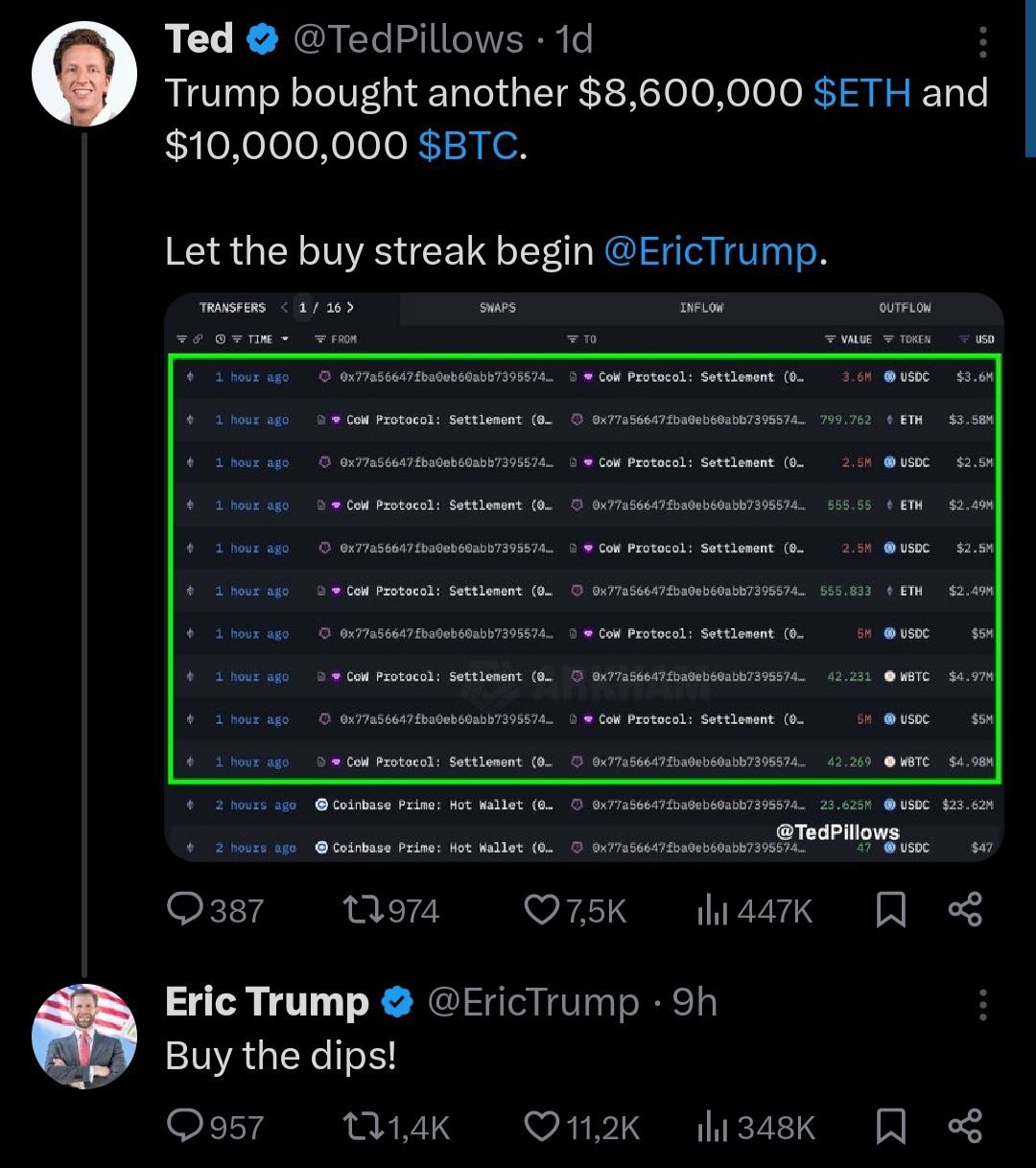
The recent decision by former President Donald Trump to invest in cryptocurrency marks a pivotal moment in the ever-evolving landscape of digital assets. With substantial purchases totaling $8.6 million in Ethereum and $10 million in Bitcoin, Trump’s foray into these cryptocurrencies reflects a growing interest among high-profile individuals in the potential of blockchain technology and digital currencies. This development comes at a time when the cryptocurrency market is experiencing significant volatility, stemming from regulatory uncertainties, market dynamics, and macroeconomic factors.
Bitcoin, known for its pioneering role in the cryptocurrency sphere, has captivated a wide range of investors due to its decentralized nature and finite supply. Conversely, Ethereum, with its robust smart contract functionality, offers a distinct use case that appeals to both developers and strategists in the tech industry. The diversification of Trump’s portfolio to include these two cryptocurrencies not only adds another layer to his investment strategies but also signals a shift in the perception of cryptocurrencies as viable investment options.
As digital currencies continue to permeate mainstream finance, Trump’s investments may serve as an endorsement of the potential future of cryptocurrencies. This move aligns with a notable trend where traditional investors and even celebrities are increasingly recognizing the transformative power of blockchain technology. The implications of such high-profile investments extend beyond personal portfolios; they also contribute to the growing legitimacy of digital currencies. In a market characterized by extreme fluctuations, these transactions highlight the balancing act of engaging with emerging technologies while navigating the inherent risks involved in such investments. Through this overview, we will further explore the ramifications of Trump’s investments and what they signify for the future of cryptocurrency.
Eric Trump’s Comment
Recently, Eric Trump made headlines with his remarks regarding the Trump family’s increasing investments in cryptocurrency, specifically mentioning their recent acquisition of $8.6 million in Ethereum and $10 million in Bitcoin. In his statement, he advised potential investors to “buy the dip,” a common phrase in the crypto community that encourages purchasing assets during price declines for better long-term returns. This advice aligns with a broader bullish attitude towards digital assets that has been exhibited by the Trump family.
Eric Trump’s comments reflect a growing acceptance of cryptocurrencies as legitimate investment vehicles, which may influence public perception. The endorsement from a prominent family previously known for their traditional business ventures sends a powerful message to both seasoned investors and those new to the cryptocurrency market. The advice to “buy the dip” could resonate with enthusiasts following price volatility typical of cryptocurrencies like Bitcoin and Ethereum. Such sentiment might encourage individuals to view digital assets more favorably, potentially leading to increased engagement in the market.
The Trump family’s involvement in cryptocurrency can underscore an important shift in investor sentiment. As more prominent public figures embrace digital currencies, it may foster a sense of legitimacy and stability around products often associated with risk and speculation. Furthermore, this bullish sentiment could inspire others within the financial and investor communities to reassess their strategies and consider incorporating cryptocurrencies into their portfolios. Ultimately, as Eric Trump advises his followers to seize investment opportunities during downturns, the potential effects on cryptocurrency’s public image and acceptance cannot be overlooked as the market continues to evolve and gain traction among mainstream investors.
Market Context
The cryptocurrency market is currently experiencing a phase characterized by short-term corrections, alongside a backdrop of growing interest from institutional investors and sovereign funds. These developments are pivotal as they signify a maturing market that is becoming increasingly integrated into traditional financial systems. The current climate of volatility in Bitcoin and Ethereum prices suggests a complex interplay of factors affecting market dynamics, ranging from regulatory scrutiny to macroeconomic influences. As these digital assets navigate fluctuations, they maintain a steadfast position as significant investment vehicles for both individuals and institutions.
Institutional interest in cryptocurrencies has expanded, particularly in Bitcoin and Ethereum, which are often viewed as cornerstone assets within the crypto ecosystem. Major financial entities are not merely dabbling in these assets; they are honing in on their long-term potential. This shift is underscored by the participation of large funds that are now allocating a portion of their portfolios to digital currencies, highlighting a growing acceptance of cryptocurrencies as a legitimate asset class. These actions are indicative of an evolving mindset among investors where the high potential of cryptocurrencies as a hedge against inflation and currency devaluation is recognized.
The recent decision by former President Donald Trump to increase his crypto holdings, investing substantial sums in Ethereum and Bitcoin, imbues these assets with additional political weight. Such moves by a high-profile figure can further the narrative of cryptocurrency adoption in the United States. Trump’s engagement with digital currencies not only draws attention to their viability but also influences public perception, potentially swaying undecided investors toward considering cryptocurrencies in their financial strategies. As the market evolves, the intersection of political actions and market sentiment may play a significant role in shaping the future landscape of crypto adoption.
Political and Economic Implications
The recent expansion of Donald Trump’s cryptocurrency holdings, particularly in Ethereum and Bitcoin, carries significant political and economic ramifications. As a former president and a high-profile figure in American politics, Trump’s ventures into decentralized assets reflect a potential shift in broader policy discussions surrounding cryptocurrency regulation. Historically, U.S. financial strategies have been predominantly centered on traditional assets; however, Trump’s investments signal a growing acceptance of alternative forms of currency. This evolution of thought could provoke regulatory changes, as legislators may feel pressured to consider the implications of cryptocurrency on the economy.
Supporters of Trump’s stance may view these investments not merely as speculative maneuvers but as calculated decisions against inflation and national debt. In times of economic uncertainty, decentralized assets such as Bitcoin and Ethereum are perceived by many as hedges against inflation. This perspective emphasizes confidence in these digital currencies, as they are less susceptible to the fluctuating policies of central banks. By positioning himself within this space, Trump potentially shifts the narrative on how influential figures regard cryptocurrency, positioning it less as a fringe movement and more as a viable alternative for asset diversification.
Moreover, the implications of Trump’s actions extend beyond his personal investments. The former president’s alignment with cryptocurrency may influence other politicians and driving policy discussions. If substantial figures begin to publicly advocate for cryptocurrencies, it may prompt legislative frameworks that could either support or regulate the market more stringently. The willingness to engage with digital currencies can also demonstrate a broader acceptance of innovative financial technologies within traditional political structures. Such developments could shape the future of financial policy in the U.S. and around the world, ultimately redefining how investors view both traditional and decentralized assets.