
A Landmark Moment for Digital Assets
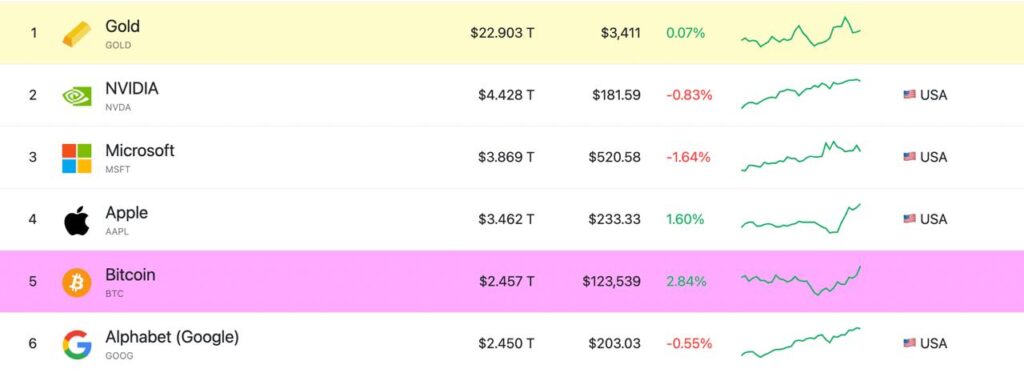
The recent milestone of Bitcoin overtaking the market capitalization of Google’s parent company, Alphabet, marks a significant turning point in the landscape of digital assets. This moment not only illustrates Bitcoin’s remarkable ascension within the financial realm but also highlights a shift in investor sentiment towards cryptocurrencies as a whole. Historically, Bitcoin has often been viewed as a speculative asset, but its consistent growth and the monumental achievement of reaching an all-time high of $123,716 per coin signals a maturation of this market. Investors are increasingly recognizing Bitcoin not merely as a currency but as a legitimate store of value akin to gold.
This unprecedented valuation indicates a growing acceptance of digital assets among institutional investors and everyday consumers alike. As Bitcoin continues to evolve, it increasingly challenges traditional financial institutions that have long held a monopoly on capital markets. The implications of this shift cannot be overstated; traditional banks, investment firms, and wealth managers are now compelled to reevaluate their strategies as the allure of digital currencies gains traction. The rise of Bitcoin as a dominant force in global finance could potentially lead to new regulatory frameworks, innovative financial products, and investment strategies designed to integrate cryptocurrencies into mainstream finance.
Moreover, the surpassing of Alphabet’s market cap serves as a barometer for the whole cryptocurrency market. With Bitcoin leading the charge, many altcoins are expected to follow suit, ultimately fostering a more diverse and competitive ecosystem. This surge reflects the increasing dissatisfaction with conventional financial systems and the desire for alternatives that offer greater autonomy and potential for growth. As digital assets continue to penetrate deeper into the fabric of our financial systems, the engagement levels from both investors and regulators will likely rise, indicating that we are on the precipice of a new era in finance. This pivotal moment holds far-reaching implications for the future of digital assets and their role in reshaping the global economy.
Key Drivers Behind the Surge
Bitcoin has recently experienced remarkable price increases, fueled by several key factors that highlight its growing significance in the global financial landscape. One of the primary drivers is the influx of institutional investments from major asset managers and corporate treasuries. Prominent financial institutions and corporations, recognizing Bitcoin’s potential as a hedge against inflation and economic uncertainty, have begun allocating substantial portions of their portfolios to this cryptocurrency. For instance, major players like Tesla and MicroStrategy have made noteworthy investments in Bitcoin, setting a trend that encourages others to follow suit.
Additionally, favorable macroeconomic conditions have reinforced Bitcoin’s image as ‘digital gold.’ With central banks around the world engaging in expansive monetary policies, concerns about currency devaluation have led investors to seek alternative assets that can preserve wealth. As traditional financial systems face increasing volatility, Bitcoin stands out as a decentralized digital asset that offers a safeguard against such risks. This perception has significantly contributed to the cryptocurrency’s surge in market value, as more individuals and institutions regard Bitcoin as a legitimate store of value.
Moreover, the role of mainstream adoption cannot be underestimated. As more companies integrate Bitcoin into their payment systems, the cryptocurrency gains legitimacy and public acceptance. Payment platforms like PayPal and Square have developed features that allow users to buy, sell, and hold Bitcoin, facilitating its use in everyday transactions. This shift not only enhances Bitcoin’s usability but also increases demand, further driving its price upwards. As consumers become more comfortable with cryptocurrency transactions, Bitcoin’s adoption is likely to escalate, solidifying its status in the financial ecosystem.
Bitcoin’s Position Among the World’s Largest Assets
As of October 2023, Bitcoin has achieved a remarkable milestone by becoming the fifth-largest asset globally. This development marks a significant transition in the asset landscape, reflecting the growing acceptance and valuation of cryptocurrencies in the financial market. To contextualize this breakthrough, it is essential to examine the current rankings of the top five assets: gold, Microsoft, Apple, and Saudi Aramco, alongside Bitcoin.
Gold continues to hold its position as the largest asset, valued primarily for its historical significance and as a hedge against inflation. Following gold, Microsoft and Apple, two tech giants, represent the strength of traditional equities, illustrating the robust performance of the technology sector in generating value for investors. Saudi Aramco, known for its vast oil reserves, ranks fourth, emphasizing the enduring influence of energy resources in the global market.
Bitcoin’s ascent to the fifth position signifies not only an impressive valuation but also a shift in investor sentiment towards decentralized assets. This shift highlights the increasing relevance of cryptocurrencies as viable investment alternatives, challenging the historical dominance of traditional assets. Investors are beginning to recognize Bitcoin’s potential as a store of value and a hedge against socio-economic uncertainties, much like gold.
Moreover, the ongoing competitive dynamics between traditional and decentralized assets signal a changing financial landscape. As institutional investors explore Bitcoin and other cryptocurrencies, the lines separating these asset classes continue to blur. This evolution suggests that Bitcoin’s recognized position among the largest assets may lead to further credibility for cryptocurrencies within traditional financial systems. The implications of this transition are profound, as they may influence future investment strategies and asset allocation methodologies across various portfolios.
The Road Ahead for Bitcoin
Following Bitcoin’s monumental achievement of surpassing Google in market value, many analysts are keen to explore the forthcoming trajectory of this revolutionary cryptocurrency. As Bitcoin continues to capture headlines globally, the question arises: Is this significant milestone a prelude to even greater valuations, potentially close to that of industry giants like Saudi Aramco? Various financial experts suggest that the increasing institutional interest and broader public adoption are factors that could drive Bitcoin’s price higher in the coming years.
The persistently evolving cryptocurrency landscape leads to speculations about the sustainability of Bitcoin’s growth. Some market observers argue that this uptrend is mainly fueled by speculation, driven by media hype and retail investor enthusiasm. In contrast, an increasing number of advocates assert that the underlying fundamentals of Bitcoin, such as its scarcity and decentralized nature, lend it strength in the long term. This divergence in perspectives highlights a critical debate within the investment community: Is Bitcoin a speculative asset, or does it represent a transformative financial tool for the future?
Moreover, the sentiment among Bitcoin advocates suggests that the cryptocurrency market remains in its early stages. With regulatory frameworks gradually taking shape across various jurisdictions, as well as significant technological advancements enhancing blockchain infrastructure, many enthusiasts believe that the potential applications of Bitcoin are yet to be fully realized. This optimistic outlook invites both seasoned investors and newcomers to reconsider their positions on digital currencies, as the narrative of cryptocurrency continues to evolve within the larger economic landscape.
As we look toward the future, it will be essential to observe how external factors—such as regulatory developments, market sentiment, and technological innovations—will shape the path for Bitcoin. The ongoing dialogue surrounding its role in the global economy will undoubtedly influence investor decisions in the years to come.