
Tether’s Growing Dominance in the US Treasury Market
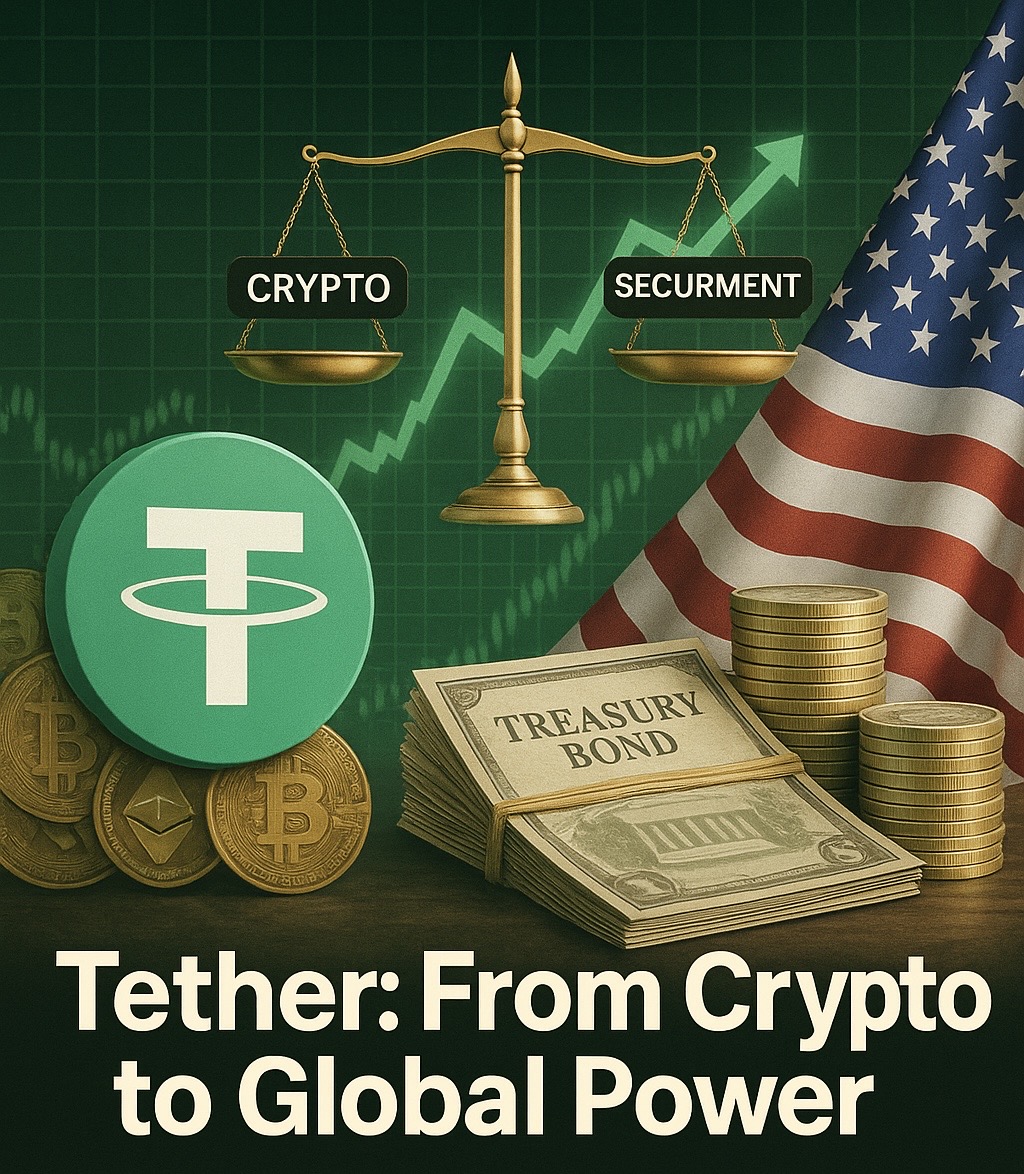
Tether, initially known for its role in the cryptocurrency ecosystem, has demonstrated remarkable growth in the U.S. government bond market, cementing its position as the 18th largest holder of these assets. This ascent reflects a comprehensive strategy where the company seeks to diversify investments and expand its financial influence.
Strategic Shift Toward U.S. Treasuries
Since its founding, Tether positioned itself as a stablecoin, offering users a hedge against crypto volatility. This stability attracted institutional investors, and as confidence in Tether solidified, the company began channeling significant assets into U.S. government bonds. By 2023, data indicated Tether’s Treasury holdings exceeded $60 billion—a move that not only expanded its market position but also enhanced operational security and liquidity.
This pivot toward government bonds is driven by the pursuit of safety in volatile markets. U.S. Treasuries are among the world’s safest investments due to their sovereign backing, making them highly attractive to financial entities. Tether also benefits from predictable returns compared to crypto market uncertainties. Its emergence as a major Treasury holder signals a risk-management strategy that aligns Tether with traditional financial giants and sovereign nations.
Impact on Sovereign Debt Dynamics
Tether’s rise has ignited debates about its influence on sovereign debt markets, particularly in the U.S. As a dollar-pegged stablecoin, it offers investors a stable alternative to volatile cryptocurrencies. Its growing adoption could reshape Treasury supply-demand dynamics, potentially:
- Reducing traditional bond demand, pressuring yields and affecting government financing costs.
- Altering liquidity flows as capital shifts toward stablecoins, prompting institutional diversification away from bonds.
- Intensifying competition between digital assets and traditional debt instruments.
This evolution marks a new era of interaction between crypto and traditional finance, with implications for global market structures.
Regulatory Hurdles and Institutional Opportunities
Tether’s expansion presents dual challenges and opportunities:
Challenges
- Regulatory fragmentation: Varying global frameworks create legal and financial uncertainties.
- Transparency concerns: Critics question asset backing due to sporadic independent audits.
- Solvency scrutiny: Maintaining 1:1 dollar reserves remains critical for trust.
Opportunities
- Bridging crypto and traditional finance, accelerating digital asset adoption.
- Catalyzing innovation in financial products leveraging stablecoin stability.
- Enabling new business models for institutions integrating crypto technologies.
Future Trajectory: Growth Under Scrutiny
Tether’s future hinges on balancing expansion with compliance. Key focal points include:
- Maintaining the dollar peg amid crypto volatility through transparent reserves.
- Adapting to evolving regulations to ensure mainstream acceptance.
- Expanding into remittances and digital commerce while reinforcing governance.
As market surveillance intensifies, Tether’s response will set a benchmark for stablecoin credibility. Its ability to demonstrate solvency and regulatory alignment will determine long-term viability.
Conclusion: A New Financial Power Player
Tether’s ascent to a top-20 U.S. Treasury holder underscores crypto’s infiltration into traditional finance. While its growth offers stability and innovation opportunities, regulatory and transparency challenges loom large. For Tether, the path forward demands rigorous compliance, audited reserves, and strategic positioning—a test case for the entire stablecoin ecosystem.