
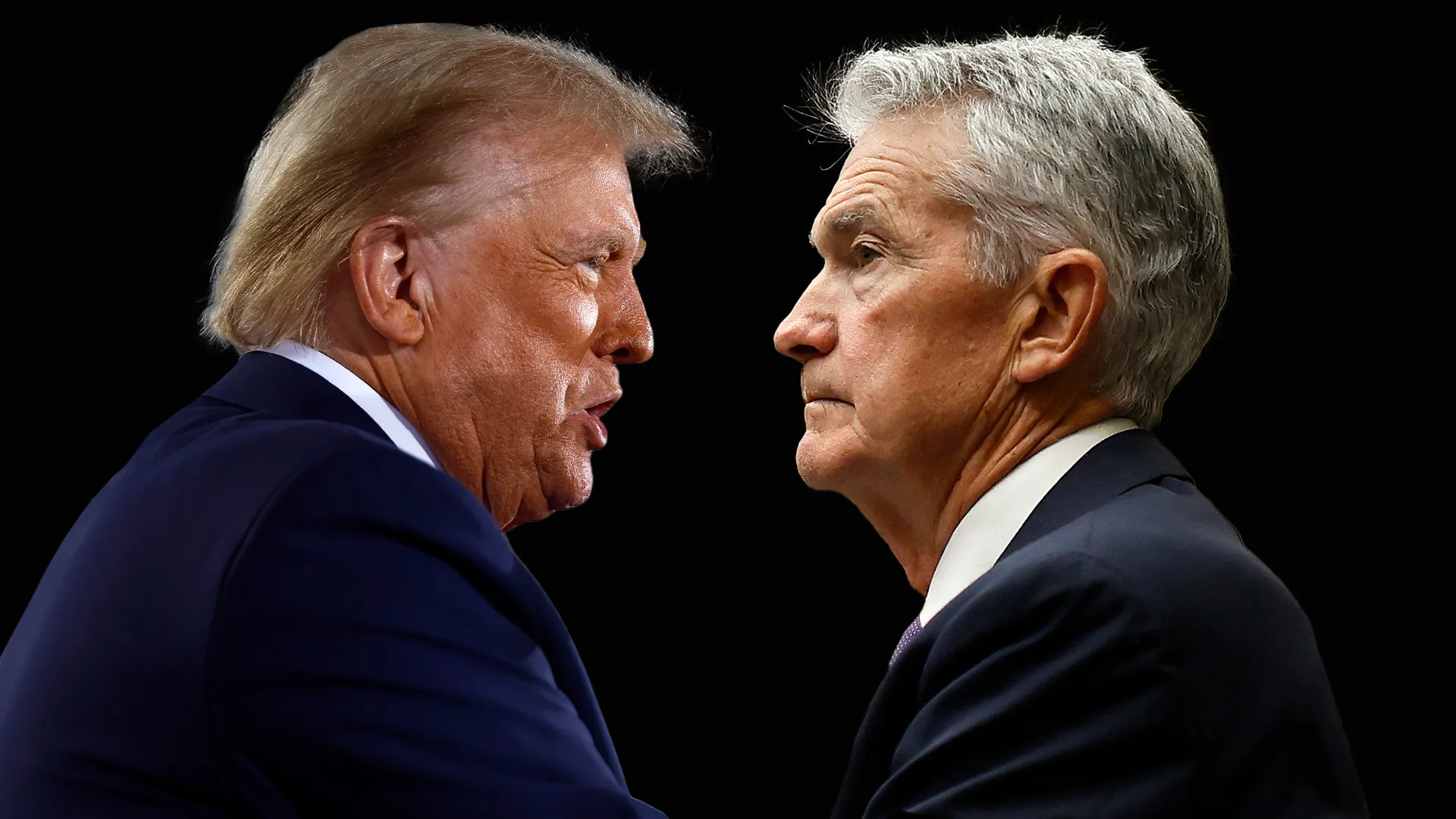
Trump’s Concerns on Economic Slowdown
Former President Donald Trump has consistently expressed reservations regarding the Federal Reserve’s monetary policy, particularly under the leadership of Chair Jerome Powell. In recent speeches and interviews, Trump has criticized the Fed’s perceived lack of decisive action amid the prevailing economic challenges. He argues that the slow economic recovery, coupled with inflationary pressures, necessitates a more aggressive approach to interest rate cuts. Trump’s contention is that the current trajectory of the Fed’s policies is insufficient to stimulate growth and foster job creation.
The former president’s apprehensions stem from a belief that excessive interest rates can stifle economic progress. He has called for the Federal Reserve to prioritize a robust recovery by implementing lower rates more swiftly. Trump posits that the Fed’s hesitance has exacerbated issues such as rising inflation, making it imperative for policymakers to adopt measures that encourage investment and consumer spending. By reducing interest rates, he asserts, the Fed could enhance access to credit for businesses and individuals, ultimately bolstering the economy.
Furthermore, Trump’s fixation on job creation influences his perspective on Federal Reserve policy. He argues that immediate action is necessary to prevent a slowdown that could inevitably lead to job losses. This emphasis on employment resonates with his previous policies that sought to lower unemployment rates during his administration. Trump’s criticisms become particularly relevant considering his past tenure, when he often advocated for monetary policy adjustments he deemed beneficial for economic growth.
In essence, Trump’s critiques reflect larger concerns regarding the effectiveness of current monetary strategies implemented by the Federal Reserve. As the economic landscape continues to evolve, the implications of his remarks could significantly influence public discourse around fiscal policy and its role in economic recovery.
The Fed’s Position: Powell’s Cautious Approach
Jerome Powell, as the Chair of the Federal Reserve, approaches monetary policy with a careful and measured stance, particularly in light of persistent inflation and a robust labor market. The Federal Reserve’s dual mandate—to promote maximum employment while stabilizing prices—significantly influences Powell’s decision-making. The current economic indicators present a complex picture, one that necessitates a balanced strategy rather than hasty maneuvering.
Inflation has remained above the Federal Reserve’s target, prompting concerns that aggressive rate cuts could exacerbate this issue. Powell’s caution stems from the belief that rapid reductions in interest rates could fuel further inflationary pressures, which already challenge the stability of the economic environment. Maintaining a focus on price stability, alongside monitoring employment levels, is crucial for Powell and the Federal Reserve. This balanced approach reflects the acknowledgment that the economy is not simply a product of monetary policy; external factors, such as global supply chain disruptions and domestic demand, also play significant roles.
Moreover, Powell perceives several risks associated with cutting interest rates too swiftly. One of the foremost concerns is that a premature easing of monetary policy could lead to a misallocation of resources, resulting in asset bubbles or increased consumer debt levels. Such scenarios could ultimately destabilize the economy and undermine the very objectives the Fed strives to achieve. Thus, while some market participants may advocate for rate cuts to stimulate growth, Powell emphasizes the importance of data-driven decisions rooted in economic fundamentals.
In summary, Jerome Powell’s cautious approach to managing rates reflects not only the current economic climate but also the strategic objectives inherent in the Federal Reserve’s dual mandate. By prioritizing a careful evaluation of inflationary risks and employment metrics, Powell aims to foster a stable economic landscape, underscoring the complexities involved in monetary policy decisions.
Market Reactions to Trump’s Remarks
The immediate market reactions to Donald Trump’s criticisms of Federal Reserve Chair Jerome Powell highlighted a complex interplay of investor sentiment and political undercurrents. Following Trump’s remarks, stock markets displayed volatility as investors navigated the implications of his comments regarding the Federal Reserve’s interest rate policies. Many investors were caught between a desire for lower rates, which could stimulate economic growth, and concerns about the independence of the Fed in light of Trump’s interventions.
In the hours following the former president’s statements, major stock indices initially rallied, reflecting a hope among market participants for looser monetary policy. However, this optimism was tempered by the realization that Trump’s criticisms may be an effort to exert political pressure on the Fed, raising doubts about the institution’s ability to maintain an independent course of action. Analysts observed that while some sectors, such as technology and consumer discretionary, benefitted from the immediate market reactions, others expressed caution, viewing the political commentary as a potential risk factor for sustained market stability.
This mixed response from the market indicates a broader concern regarding how political sentiment can sway monetary policy. Short-term investors appeared more inclined to respond to speculation about future rate cuts as a direct result of Trump’s remarks, but long-term investors exhibited hesitance, wary of the lasting impacts this could have on the credibility of the Fed. As discussions around interest rates continue, analysts signal that the sentiment among market participants reflects an underlying uncertainty about the broader economic outlook, driven by a blend of policy and political influences at play.
The Future of Monetary Policy: What Lies Ahead for the Fed?
The future of monetary policy under the Federal Reserve, particularly under the leadership of Chair Jerome Powell, is poised at a critical juncture. As inflationary pressures continue to influence economic conditions, the Federal Reserve faces the imperative of balancing the need to temper inflation while also supporting economic growth. This dual mandate poses a significant challenge in shaping future monetary policy, which may include reviewing the current interest rate levels.
Recent political dynamics, notably the ongoing critiques from influential figures such as former President Donald Trump, create an additional layer of complexity. Trump’s public questioning of Powell’s decisions regarding interest rates raises important questions surrounding the Fed’s independence and the potential impact of political pressures on policy formulation. Should this influence lead to a reconsideration of monetary strategies, the implications for economic stability could be profound.
Looking ahead, upcoming Federal Reserve meetings will be crucial. Economic data, particularly regarding inflation rates, employment figures, and overall economic performance, will guide Powell’s strategies going forward. Analysts are observing these trends closely as they speculate on potential shifts in policy direction. A continuation of high inflation may necessitate further rate adjustments to ensure long-term economic health and consumer confidence, while signs of economic slowdown could prompt a reevaluation of tightening measures.
In this context, Powell may also consider whether to adopt a more aggressive stance on rate cuts, especially if pressured by both economic conditions and prominent political figures. The outcomes of these considerations will not only direct the course of the Federal Reserve’s monetary policy but also shape the broader economic landscape. Maintaining a careful balance between inflation control and growth stimulation will remain a central focus of Powell’s approach in the context of a changing economic environment.