
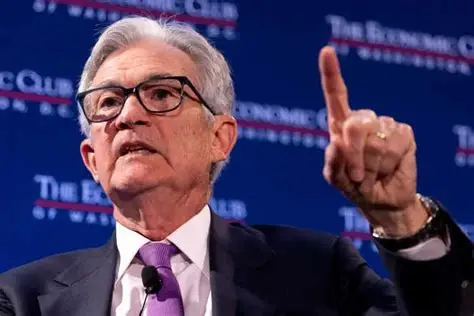
Overview of Powell’s Remarks
In a recent address, Federal Reserve Chair Jerome Powell articulated his concerns regarding the evolving landscape of the U.S. labor market. Acknowledging the complexities and potential vulnerabilities, Powell emphasized that increasing risks to employment could necessitate a reassessment of current interest rate policies. His remarks come at a time when economic indicators present a mixed picture, prompting the Fed to remain vigilant in its monitoring of labor market dynamics.
Powell highlighted that while the job market has demonstrated resilience, certain signs point to emerging challenges that could impact employment levels. These risks could arise from various sources, including potential economic slowdowns, inflationary pressures, and shifting consumer behaviors. He indicated that the Federal Reserve is committed to closely observing these factors, which could influence its future policy decisions regarding interest rates.
Although Powell did not provide a definitive timeline for any potential interest rate cuts, his statements suggested that the Federal Reserve is prepared to act should the employment situation decline further. This cautious yet attentive approach underscores the Fed’s dual mandate to promote maximum employment and stable prices. By signaling a possible shift in monetary policy, Powell aims to assure markets that the central bank is responsive to evolving economic conditions while reiterating the importance of a balanced approach to policy adjustments.
The remarks serve as a reminder of the delicate interplay between labor market health and interest rate strategies. As policymakers navigate these complexities, Powell’s speech reflects a careful consideration of the broader economic implications. Moving forward, it will be crucial for observers and stakeholders to monitor the developments in employment trends and the Fed’s response, as they may play a significant role in shaping the economy’s trajectory.
Impact of Economic Conditions on Employment
The current economic landscape plays a critical role in shaping the dynamics of the labor market, impacting employment levels and job stability. Recent reports indicate a growing concern about rising employment risks, a sentiment echoed by Federal Reserve Chair Jerome Powell. Economic indicators such as inflation rates, consumer spending, and wage growth are intricately linked to employment levels, providing insights into the overall health of the job market. As inflation remains elevated, it creates a ripple effect that can lead to diminished consumer purchasing power, consequently muting demand for goods and services. This reduction in demand can adversely affect employers’ capacity to maintain or expand their workforce.
Moreover, interest rates and monetary policy are essential factors influencing economic conditions. With recent discussions around potential rate cuts by the Federal Reserve, there emerges a sense of uncertainty about how these measures will affect employment. Lower interest rates could theoretically stimulate economic growth, encouraging businesses to hire more aggressively. However, if these cuts are perceived as a reaction to deteriorating economic conditions, it may instigate further anxiety among employers, leading them to adopt a more cautious approach to hiring amid worries about future profitability.
Additionally, the labor market is indirectly influenced by external factors, such as geopolitical events and global economic trends. Disruptions in international supply chains and fluctuations in commodity prices can provide unexpected challenges, exacerbating risks to employment stability. Therefore, a comprehensive understanding of current economic conditions is necessary for assessing the labor market’s resilience. The intricate relationship between the economy and employment highlights why the Federal Reserve is closely monitoring these dynamics as it considers potential rate adjustments to address rising employment risks.
The Role of Inflation and Tariffs
In recent discussions, Federal Reserve Chair Jerome Powell has delineated the intricate interplay between inflation and tariffs, emphasizing that these economic factors play a significant role in shaping monetary policy. Tariffs, often viewed as a tool for influencing trade dynamics, can have an immediate, albeit typically short-lived, impact on inflation levels. Powell posits that while tariffs can lead to a temporary rise in consumer prices, their long-term effects may diminish as markets adjust and supply chains evolve. This observation suggests that the inflationary pressures stemming from tariffs should not be regarded as permanent fixtures in the economic landscape.
Moreover, Powell’s comments underscore the Fed’s broader narrative regarding inflation management. The central bank’s objective is to maintain stable prices while fostering maximum employment. As tariffs can lead to increased costs for businesses, the Fed must carefully evaluate how these elevated costs translate into consumer prices and ultimately affect inflation targets. The temporary nature of tariff-induced inflation raises questions about the urgency of monetary policy actions. If inflation driven by tariffs is expected to subside over time, the Federal Reserve may adopt a more measured approach in adjusting interest rates, allowing for a strategic balancing act between promoting growth and curbing inflation.
Furthermore, the integration of tariffs into the Fed’s decision-making process signifies a crucial consideration for the path forward. As the global economy continues to grapple with shifting trade relationships, understanding how tariffs influence inflation will be essential for policymakers. The potential implications for future interest rates could lead to a more nuanced approach, one that accommodates both the immediate effects of tariffs and the longer-term economic projections. Navigating this complex landscape necessitates a vigilant assessment of prevailing economic conditions, reinforcing the importance of the Fed’s ongoing evaluations in light of evolving inflationary pressures.
Market Reactions and Future Speculations
Following Federal Reserve Chairman Jerome Powell’s recent comments regarding potential rate cuts due to increasing employment risks, market reactions have been notably pronounced. Analysts and investors alike have taken a cautious view, interpreting Powell’s remarks as a signal of a potentially dovish shift in monetary policy. The immediate aftermath saw a rally in equity markets, with stocks responding positively as investors speculated on the implications of looser monetary conditions. Conversely, bond yields experienced a decline, reflecting expectations of lower interest rates in the near future. This dual movement indicates a collective market sentiment leaning towards a more accommodative monetary stance.
As Powell’s cautious tone reverberated through financial markets, market participants began to reevaluate their strategies in anticipation of forthcoming economic data. Investors are advised to closely monitor key indicators, particularly employment figures, inflation data, and consumer spending trends. These data points are crucial, as they not only influence the Fed’s decision-making process but also serve as barometers for economic health. In addition, the upcoming reports on retail sales and manufacturing activity are expected to provide further insight into consumer confidence and overall economic stability, which are vital for shaping future Fed policy.
The broader implications of Powell’s signals extend beyond immediate market fluctuations. A sustained focus on employment risks underscores the Fed’s commitment to balancing growth while preventing a significant slowdown. This delicate balancing act necessitates careful observation of economic trends to align monetary policy effectively with evolving market conditions. Analysts emphasize that while the prospects for rate cuts appear promising based on current trends, ongoing economic data will be instrumental in determining the Fed’s path forward. As such, stakeholders must remain vigilant in assessing these developments to navigate the evolving financial landscape effectively.