
The Costly Move: A Swing Trader’s Decision
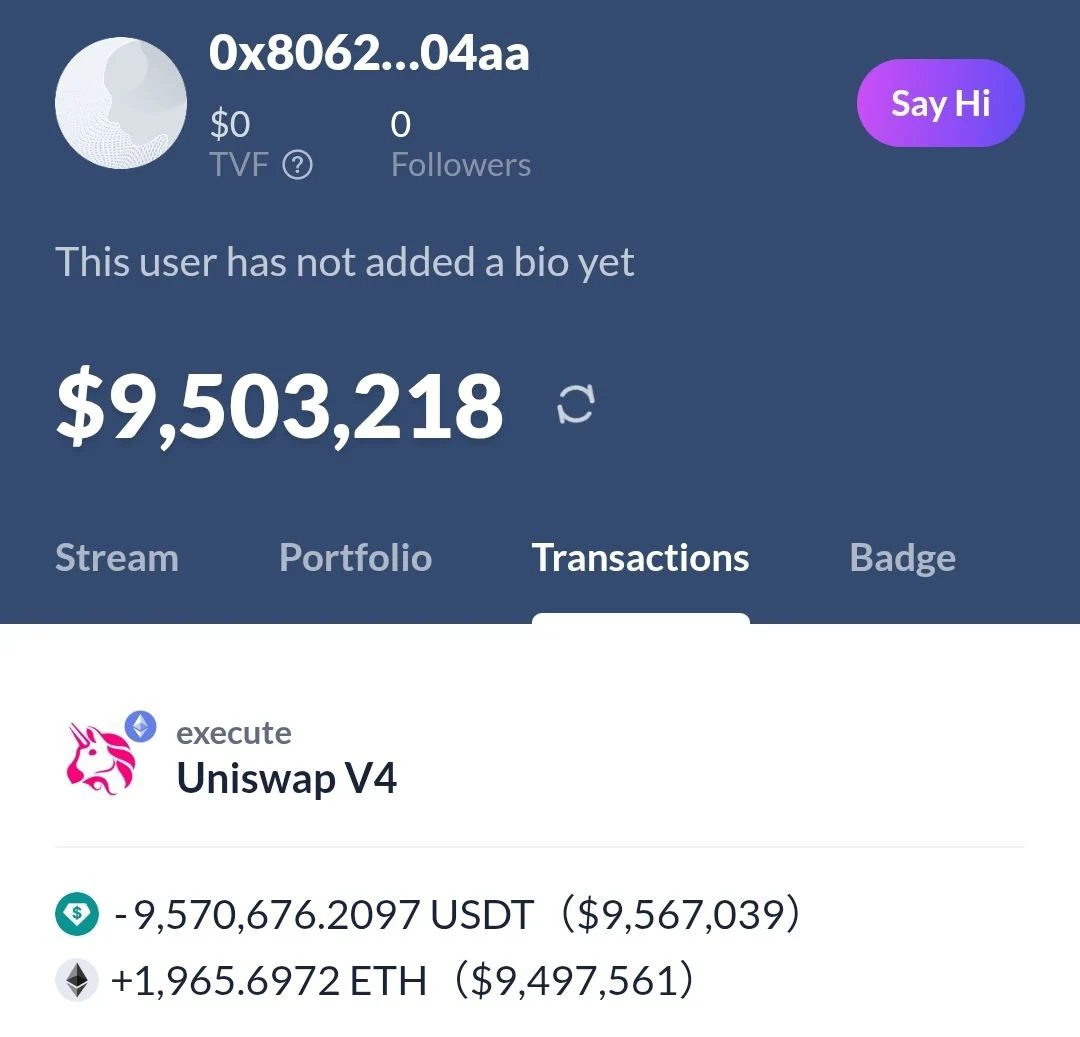
In the fast-paced world of cryptocurrency trading, decisions are often made under pressure, which can lead to significant consequences. A particular case involved a swing trader identified by the wallet address 0x8062, who engaged in a series of transactions with Ethereum (ETH) that ultimately exemplified this unpredictability. The trader’s journey began with a calculated decision to sell 2,277 ETH at an average price of $4,203. This transaction culminated in a staggering total of approximately $9.57 million, demonstrating both the potential rewards and risks associated with trading in the volatile crypto market.
However, the tide turned quickly for this trader. Following the sale, the crypto market’s inherent volatility and fluctuating sentiments led to a profound shift in the trader’s mindset. Fueled by a sense of urgency and panic, the swing trader re-entered the market. In a bid to capitalize on a perceived opportunity, he purchased 1,966 ETH at an elevated price of $4,869. This decision starkly illustrated how emotions can govern trading behavior, often prompting swift actions that diverge from strategic planning.
This move not only resulted in an elevated cost basis compared to the initial sale but also culminated in a net loss of 311 ETH when the market did not respond favorably to the anticipated recovery. The sequence of events highlights the rapid changes in sentiment that can occur within the crypto environment, where prices can fluctuate unpredictably within short time frames. The interplay of emotions, market conditions, and trading decisions serves as a crucial lesson for swing traders and investors alike, emphasizing the need for careful consideration in every trade.
FOMO and Market Timing: A Dangerous Combination
The psychological landscape of trading is riddled with emotional pitfalls that can significantly impact decision-making processes. One prevalent phenomenon among traders is FOMO, or the Fear of Missing Out. This intense feeling compels individuals to act hastily, often leading them to make impulsive trading decisions. In the case of swing trading, especially in volatile markets like cryptocurrencies, FOMO can be particularly detrimental. When prices surge, the fear of being left behind often drives traders to buy into trends that lack sufficient groundwork, thereby exposing them to the risk of significant losses.
The swing trader who sold low and subsequently bought high is a classic example of how FOMO can distort a trader’s perception. Initially, they may have made a calculated decision to sell during a price drop, aiming to cut their losses. However, as prices rebound, the anxiety associated with FOMO prompts them to re-enter the market at an inflated price, only to watch their investment decline again. This cycle can lead to substantial financial setbacks, primarily because emotions overpower rational thinking. Attempting to time the market based on such feelings is fraught with peril.
Emotional trading can be exacerbated by the rapid fluctuations inherent in cryptocurrencies. Unlike traditional markets, which often exhibit more gradual changes, cryptocurrency prices can swing drastically in mere minutes. This rapid pace increases the likelihood of impulse-driven decisions. Many traders fall into the trap of attempting to time the market, convinced they can predict swings based solely on emotional instincts or short-term trends. Unfortunately, this often results in a counterproductive approach where fear and greed overshadow analytical judgment, ultimately leading to poor trading outcomes.
Ethereum’s Record-Breaking Rally Explained
Ethereum’s recent surge past the $4,880 mark has captured the attention of traders, investors, and analysts in the cryptocurrency space. This remarkable rally signifies not only a pivotal moment for Ethereum but also reflects broader trends within the entire crypto market. Multiple factors have contributed to this exponential growth, making it essential to explore the driving forces behind this phenomenon.
One of the critical aspects has been the substantial inflow of institutional investment. Major financial players have begun allocating significant resources into Ethereum, recognizing its potential as a cornerstone of decentralized finance (DeFi) and its role in powering various decentralized applications (dApps). This growing acceptance among institutional investors has bolstered confidence in Ethereum’s long-term viability, subsequently driving prices higher.
In addition to institutional inflows, there has been a surge in the adoption of decentralized applications and protocols that run on the Ethereum network. As developers continue to innovate and launch solutions that facilitate various financial mechanisms, such as lending, borrowing, and trading, the demand for Ethereum has grown substantially. This increase in practical use cases for Ethereum supports its position as a vital asset in the digital landscape.
Furthermore, the renewed interest in DeFi has played a significant role in Ethereum’s rally. The DeFi sector has demonstrated remarkable resilience and growth, attracting attention from retail and institutional investors alike. As more users engage in yield farming, liquidity providing, and participating in various DeFi products, the need for Ether (ETH) has escalated, contributing to its rising price.
As Ethereum approaches the psychological barrier of $5,000, speculation arises about its potential to reach this new milestone. Achieving this level could signal an unprecedented era for Ethereum and influence not only traders but also the entire cryptocurrency ecosystem. The confluence of these factors showcases Ethereum’s remarkable journey, reinforcing its reputation as a leading cryptocurrency with significant implications for future investment strategies.
Lessons Learned: Avoiding Costly Trading Mistakes
In the realm of swing trading, the experiences gained from mistakes can be invaluable for future success. One significant lesson derived from a swing trader’s costly errors with Ethereum is the necessity of establishing a robust trading strategy. A well-defined strategy not only provides a roadmap for navigating the volatile nature of cryptocurrency markets but also helps traders maintain focus and consistency in their decision-making processes.
Understanding market trends is another crucial element that traders must incorporate into their trading practices. This involves analyzing price movements, leveraging technical indicators, and keeping abreast of news that may influence market conditions. The ability to identify trends can significantly enhance the probability of making profitable trades and reduce the likelihood of succumbing to emotional decision-making during times of volatility.
Moreover, the value of patience cannot be overstated in the context of trading. Impulsive trading decisions often lead to regrettable outcomes, particularly when traders react hastily to short-term fluctuations. It is essential for traders to cultivate a mindset that emphasizes patience and discipline, allowing them to wait for optimal entry and exit points aligned with their trading strategy. Developing this sense of perseverance enables swing traders to capitalize on market opportunities rather than chasing fleeting trends.
Lastly, maintaining a grounded and analytical perspective is critical. In the face of market fluctuations, it is all too easy for traders to be swayed by emotions such as fear or greed. Exercising rational decision-making is paramount; traders should consciously strive to evaluate their choices based on data and analysis rather than emotional responses. By integrating these lessons into their trading approach, individuals can significantly mitigate the risk of costly mistakes and enhance their overall trading proficiency in the challenging world of swing trading.