
The Impact of Powell’s Comments on Bitcoin Futures
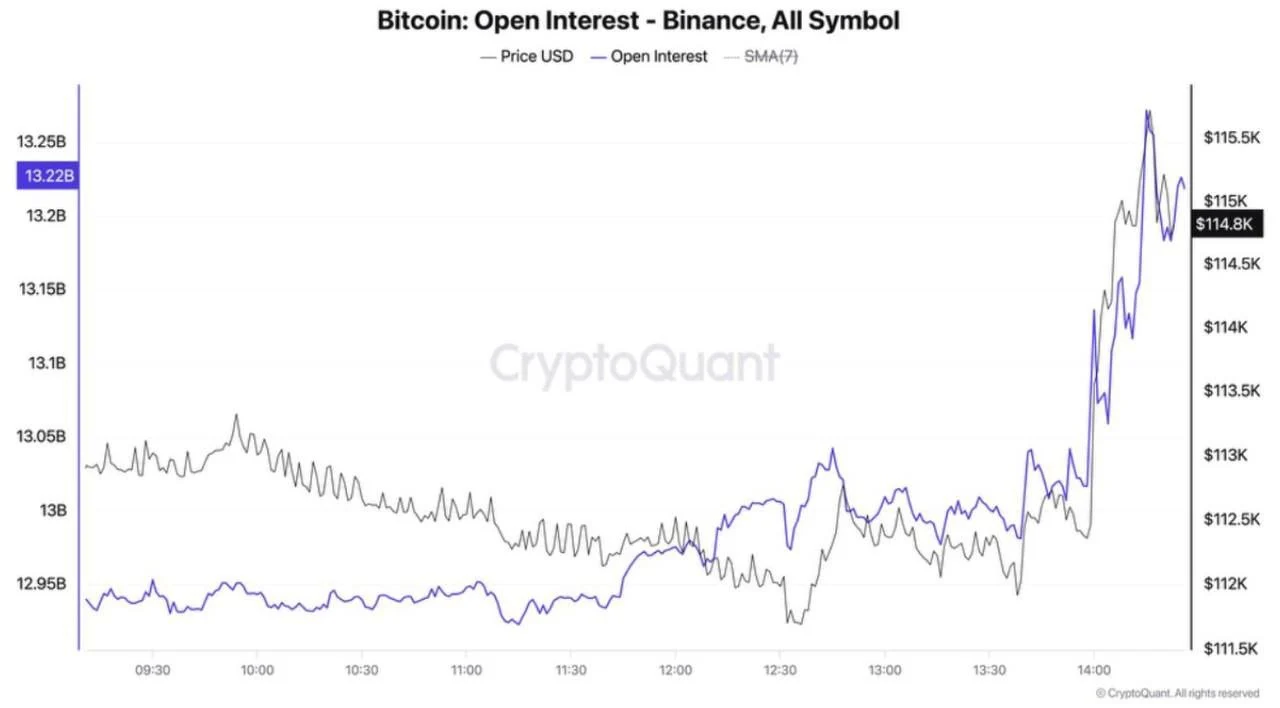
Recent statements made by Federal Reserve Chair Jerome Powell have had a notable impact on the financial landscape, particularly within the cryptocurrency market. Powell’s remarks suggesting a potential shift towards monetary easing have triggered an enthusiastic reaction among traders, resulting in a remarkable $300 million increase in Bitcoin futures transactions on the Binance platform. This surge highlights not only the responsiveness of the cryptocurrency market to macroeconomic cues but also the growing importance of Bitcoin as a speculative asset among investors.
The notion of monetary easing generally leads to a less restrictive financial environment, encouraging higher risk-taking among market participants. As Powell hinted at the possibility of lower interest rates or even more accommodative monetary policy, traders began to reevaluate their positions in various asset classes. Bitcoin futures, in particular, experienced an influx of trading activity, driven by the perception that a looser monetary stance would bolster asset prices, including cryptocurrencies. The direct correlation between Powell’s comments and the surge in Bitcoin futures trading indicates a market keenly attuned to central bank signals.
Moreover, open interest in Bitcoin futures serves as a valuable indicator of market sentiment. A significant rise in open interest often suggests increasing participation and confidence in the market, which was evident following Powell’s remarks. In this instance, the sharp jump in trading volumes and open interest reflects heightened trader engagement, likely fueled by expectations of sustained investment in Bitcoin amidst potential changes in monetary policy. As Powell continues to influence market dynamics, his comments could play a pivotal role in shaping the trading landscape for Bitcoin and other cryptocurrencies.
Understanding Open Interest in the Context of Bitcoin Futures
Open interest refers to the total number of outstanding derivative contracts, such as futures or options, that have not been settled. In the context of Bitcoin futures traded on platforms like Binance, open interest serves as a critical indicator of market strength and trader sentiment. When open interest increases, it generally suggests that more capital is entering the market, whereas a decline in open interest can signal that money is leaving the trading space. For Bitcoin, which has experienced significant volatility, tracking open interest can provide valuable insights into market trends and trader confidence.
Recently, the open interest in Bitcoin futures reached an impressive $13.3 billion in open contracts. This substantial figure indicates that both retail and institutional traders are positioning themselves aggressively, reflecting a strong belief in prospective price increases. Such a level of open interest not only showcases heightened participation from various market players but also signifies that considerable capital is being allocated towards the expectation of Bitcoin price movements. This can be particularly revealing during significant market events, such as the remarks made by influential figures like Jerome Powell, which often lead to rapid changes in market sentiment and price action.
Moreover, open interest can also act as a proxy for market momentum. An increase in open interest, combined with rising prices, typically suggests a bullish sentiment among traders. Conversely, if open interest rises but prices decline, it might indicate a strong bearish outlook or increased short selling. Thus, monitoring open interest in the realm of Bitcoin futures helps in understanding the dynamics at play in the market, particularly as traders navigate their strategies surrounding major announcements and economic developments.
Powell’s Influence on Monetary Policy and Its Effects on Bitcoin
The recent comments made by Federal Reserve Chairman Jerome Powell have reignited discussions surrounding U.S. monetary policy and its significant implications for various financial markets, including cryptocurrencies like Bitcoin. Powell’s indication of potential rate cuts signifies a shift towards a looser monetary environment. Such changes traditionally lead to diminished yields on conventional assets, prompting investors to explore alternative options that offer higher possible returns. In this context, Bitcoin emerges as an appealing prospect.
The historical relationship between monetary policy adjustments and Bitcoin’s valuation highlights a pronounced correlation. As interest rates decrease, the opportunity cost of holding non-yielding assets like Bitcoin diminishes. Investors tend to gravitate towards cryptocurrencies when the attractiveness of traditional financial instruments, such as bonds and savings accounts, wanes. This dynamic elevates Bitcoin’s demand, often leading to surges in its price, as seen following earlier rate cuts by the Federal Reserve.
Furthermore, the interplay between macroeconomic factors and Bitcoin behavior warrants examination. As inflationary pressures rise, the perceived safety of a decentralized digital asset relative to fiat currency increases, further driving Bitcoin’s appeal as a hedge against currency devaluation. Additionally, a more risk-on appetite among investors typically emerges in a favorable monetary policy environment, encouraging a broader shift towards risk assets, which further strengthens Bitcoin’s position in the market.
In light of Powell’s remarks and their anticipated consequences on monetary policy, the trajectory for Bitcoin remains intricately linked. Observers are keenly analyzing these developments, acknowledging that shifts in Fed policy may not only influence traditional financial markets but also significantly affect the cryptocurrency landscape, shaping investor sentiment and market dynamics moving forward.
Future Outlook: What Lies Ahead for Bitcoin Futures
The recent surge in Bitcoin futures trading activity following Federal Reserve Chair Jerome Powell’s remarks has undoubtedly captured the attention of market participants. As the futures market becomes increasingly dynamic, it raises pertinent questions about the sustainability of this momentum. Will the heightened interest in Bitcoin futures facilitate a steady increase in Bitcoin prices, or are we instead headed for greater volatility as traders position themselves for potential market fluctuations?
An analysis of market indicators is crucial to understanding the future landscape of Bitcoin futures. The recent uptick in volume suggests that institutional investors are entering the market, which historically could lend some degree of stability. However, it is important to recognize that the influx of new participants can also contribute to erratic price movements, particularly if speculative trading becomes predominant. Traders should consider key metrics such as open interest, volatility indices, and overall trading volume to gain insights into market sentiment and potential price trajectories.
Moreover, developments in regulatory frameworks will play a significant role in shaping the Bitcoin futures market. The implementation of more stringent regulations could either bolster market confidence or introduce complexities that challenge price stability. Therefore, it is imperative for traders and investors to remain vigilant and adapt their strategies in response to evolving regulations and market dynamics.
Looking ahead, it is likely that we will see a bifurcation in market behavior—some investors may adopt a long-term bullish outlook driven by fundamentals, while others might chase short-term gains, heightening speculative trading. The balance between these two forces will dictate future price movements. Therefore, analyses that encompass both macroeconomic factors and trader sentiment will be essential for navigating the intricate and rapidly changing realm of Bitcoin futures.