
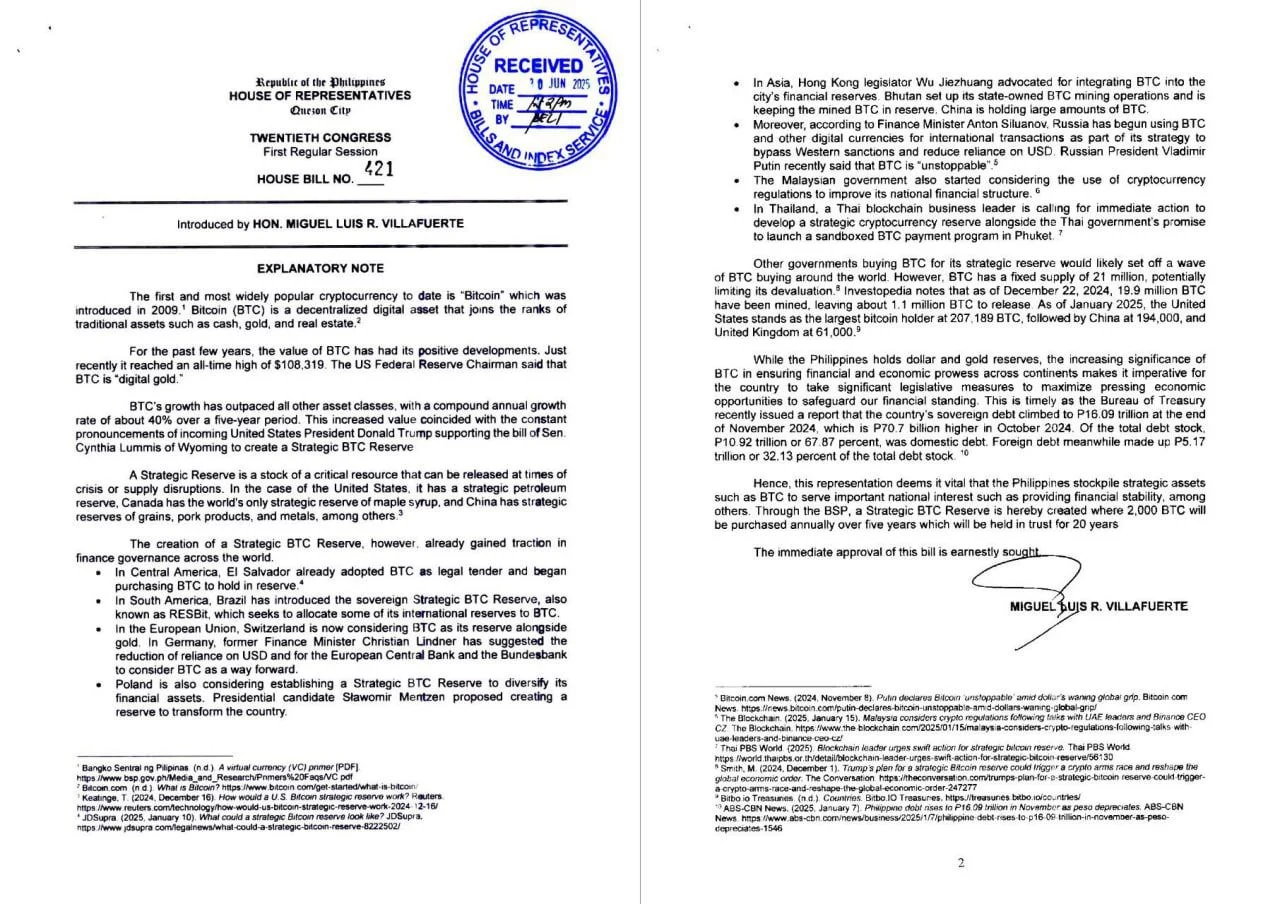
Introduction to House Bill 421
In a pioneering move for digital asset management in Southeast Asia, Congressman Migz Villafuerte has introduced House Bill 421, a legislative proposal aimed at establishing a strategic Bitcoin reserve in the Philippines. This initiative signals the government’s recognition of Bitcoin not only as a cryptocurrency but also as a potential long-term store of value that can contribute to economic stability and growth. The significance of this proposal cannot be overstated, as it welcomes the integration of cryptocurrency into the official financial framework of the country.
House Bill 421 proposes that the Bangko Sentral ng Pilipinas (BSP), the country’s central bank, is mandated to actively purchase a predetermined amount of Bitcoin on an annual basis. This strategic move is designed to ensure that the Philippines is not only a participant in the evolving landscape of digital currencies but also a leader in the region. Through this bill, Congressman Villafuerte envisions a future where the state holds a significant reserve of Bitcoin, ultimately enhancing the nation’s financial resilience against global market fluctuations and potential economic crises.
Moreover, the bill outlines specific mechanics by which the BSP will execute this purchasing strategy, reflecting a calculated approach to cryptocurrency investment. It is anticipated that such a reserve could serve various purposes, from stabilizing the local financial system to serving as a hedge against inflation and currency devaluation. The implications of these actions are profound, suggesting a shift in how traditional regulations might adapt to accommodate rapidly evolving technologies such as blockchain and cryptocurrencies.
As the Philippines embarks on this unprecedented initiative, the potential benefits of a strategic Bitcoin reserve lay the groundwork for a broader adoption of cryptocurrency within the Southeast Asian financial ecosystem, fostering innovation and collaboration on a larger scale.
Rationale Behind Bitcoin as a Strategic Asset
In the contemporary financial landscape, the proposal to integrate Bitcoin as a strategic asset within the national reserve framework has gained traction. Congressman Villafuerte’s advocacy centers on several key arguments that underscore Bitcoin’s potential as a resilient financial safeguard. First and foremost, one of the significant considerations is national security. By strategically utilizing Bitcoin, the Philippines could mitigate vulnerabilities that arise from global economic shifts. As cryptocurrencies operate independently of traditional financial institutions, they provide a level of financial autonomy and protection from geopolitical tensions that may threaten economic stability.
Moreover, this proposal positions Bitcoin as a hedge against inflation. In an era where inflationary pressures can destabilize economies, Bitcoin’s limited supply and decentralized nature present an attractive alternative for maintaining debt stability. As a digital asset, Bitcoin has demonstrated resilience against inflationary trends observed in traditional fiat currencies. By allocating a portion of the national reserves to Bitcoin, the country may effectively shield itself from the adverse impacts of fluctuating currency values and inflationary risks, ensuring a more stable economic environment for its citizens.
Another compelling argument pertaining to the selection of Bitcoin is the strategic diversification of reserves. Historically, nations have relied on traditional assets such as gold to safeguard their wealth. However, with the advent of digital currencies, there arises an opportunity to expand the reserve composition beyond conventional assets. Integrating Bitcoin into the reserve strategy enables a more modern and holistic approach to financial management. Such diversification not only enhances resilience against market volatility but also positions the Philippines as a progressive player in the rapidly evolving digital economy.
Comparative Global Context and Trends
The global landscape of cryptocurrency adoption has progressed significantly over the past few years, with various nations implementing distinct strategies towards integrating bitcoin into their financial systems. The introduction of House Bill 421 by Congressman Villafuerte places the Philippines within this dynamic context, where countries are exploring different approaches to bitcoin’s potential benefits. Notably, El Salvador made headlines for its bold move to adopt bitcoin as legal tender, which was seen as a transformative decision aimed at increasing financial inclusion and attracting foreign investment. This immediate use of bitcoin contrasts sharply with Villafuerte’s proposed strategy of creating a strategic reserve, wherein bitcoin would be accumulated over time rather than rapidly deployed in everyday transactions.
This distinction between accumulation and immediate use highlights a significant variance in how nations perceive the utility of bitcoin. While El Salvador’s approach can be seen as a gamble on short-term gains and immediacy, the strategic reserve proposed by Villafuerte aims to position the Philippine economy as a resilient and adaptive player in the evolving cryptocurrency landscape. Such a stance reflects an understanding of bitcoin’s role not simply as an alternative currency, but as a potential store of value—akin to how traditional reserves are managed.
By adopting a more cautious and calculated approach to bitcoin, the Philippines could align itself alongside other countries contemplating sovereign bitcoin strategies. The approval of this bill could lead to broader discussions regarding the implications of such reserves on national and international finance. As nations observe the repercussions of El Salvador’s bold approach, the Philippines’ potential strategic reserve may promote a more sustainable and prudent method in navigating the complexities inherent in cryptocurrency adoption, ultimately fostering more inclusive and well-rounded financial policies moving forward.
Challenges and Future Outlook
The introduction of House Bill 421, proposing a strategic Bitcoin reserve in the Philippines, undoubtedly brings a mix of opportunities and challenges. As the nation contemplates incorporating bitcoin into its economy, attracting investment becomes a significant benefit. The allure of bitcoin and blockchain technology has been known to spark innovation, drawing both domestic and international investors eager to engage with groundbreaking digital finance solutions. This could lead to a broader adoption of blockchain applications, enhancing transparency and efficiency in various sectors.
However, the implementation of a bitcoin reserve is fraught with challenges. One of the foremost concerns is the inherent volatility of bitcoin prices. The cryptocurrency market has historically shown vast fluctuations, making the value of any reserve precarious. Such volatility may pose risks to national economic stability, especially if a substantial portion of taxpayer funds is tied up in this digital asset. This scenario raises questions about the prudence of having a reserve that could potentially diminish in value, impacting public trust and financial security.
Regulatory hurdles present another significant challenge. The lack of comprehensive regulations governing cryptocurrencies in the Philippines may hinder effective management of the proposed reserve. Uncertainty in the regulatory landscape could dissuade investors and hinder the potential for blockchain innovation. Additionally, public perception plays a critical role in the acceptance of such initiatives. Concerns regarding the utilization of taxpayer funds for speculative investments may incite skepticism among constituencies, necessitating robust educational and promotional efforts to win public support.
In conclusion, while House Bill 421 could lead to significant advancements in the Philippines’ digital finance landscape, it also presents notable challenges that must be carefully navigated. The implications of this bill extend beyond immediate economic gains, suggesting a need for a comprehensive strategy that addresses both the benefits and risks associated with bitcoin as a component of national economic policy.